
Living in Westmount: Real Estate, Property Types and What to Know Before Buying
Westmount real estate guide: a separate city in the Montréal agglomeration, property types, Q3 2026 Centris data, heritage and renovation rules, welcome tax, 2026 taxes and services, plus a checklist for buyers.
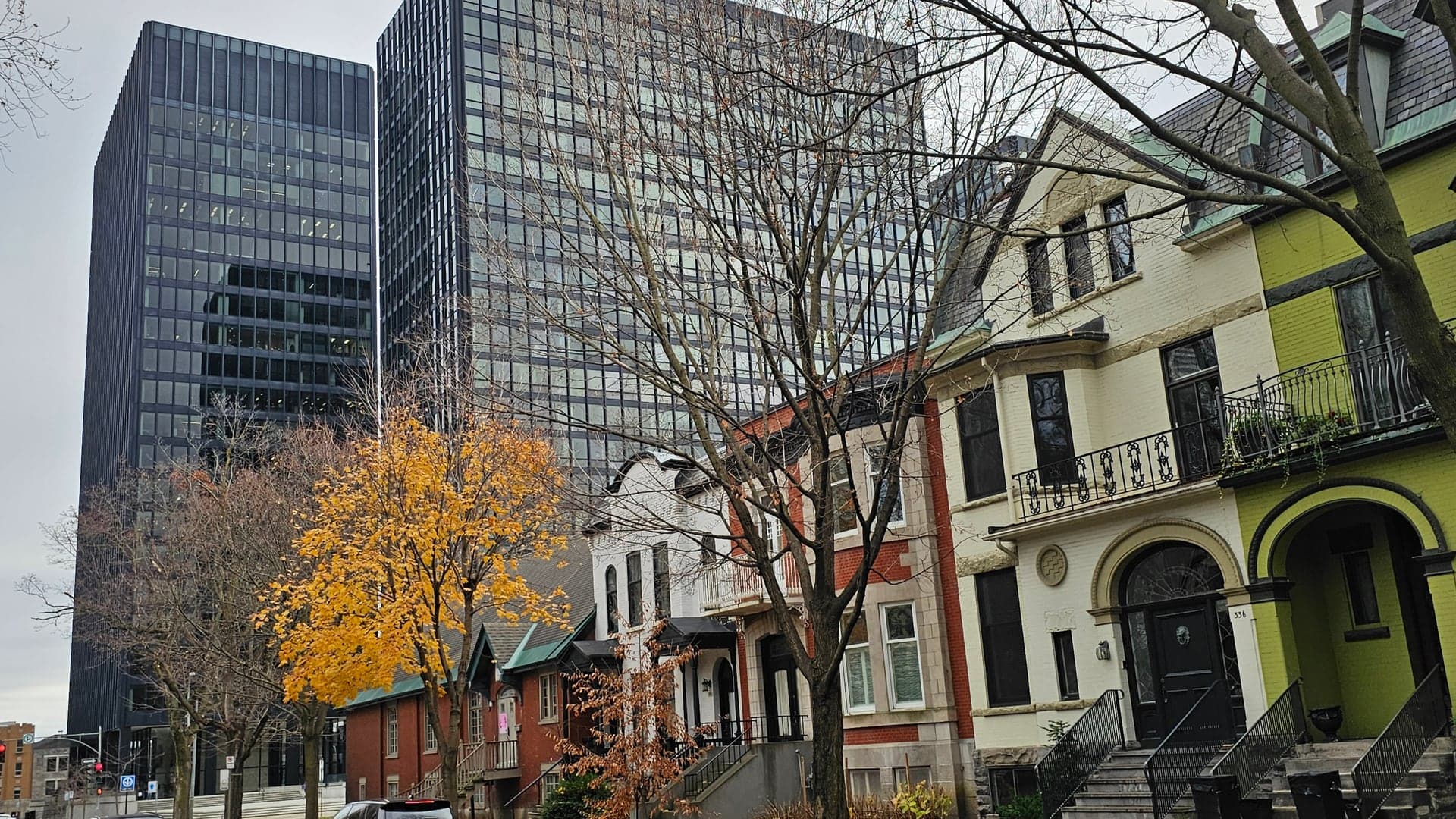
Thinking of buying a house or a condo in Westmount, Quebec? Before you visit homes for sale, this Westmount real estate guide covers the city's status, property types, the Q3 2026 market, heritage and renovation rules, costs specific to Westmount and local services. Information checked on November 9, 2026.
At a glance
- Westmount is a separate city, reconstituted in 2006: it is part of the Montréal agglomeration, not of the City of Montréal.
- According to Centris, the median price of single-family homes in Westmount was $2,257,500 over the four quarters ending in Q3 2026.
- Its National Historic Site status (2011) is honorific: renovation work is governed mainly by the City's own by-laws.
- Most exterior work goes through the SPAIP process, the Planning Advisory Committee and City Council.
- Westmount sets its own transfer duties (3% at most, above $500,000) and its own property tax ($0.6583 per $100 in 2026).
Is Westmount part of Montréal?
Not of the City of Montréal. Westmount is a separate city, surrounded by Montréal, that is part of the agglomeration. According to Québec's municipal directory, it was constituted on January 1, 2006, and has 20,369 residents and an area of 4.02 km².
Its mayor sits on the agglomeration council with the mayors of the 13 other reconstituted cities. That council manages services shared across the island, such as emergency services and public transit. The City of Westmount sends a single municipal tax bill, issues its own permits and runs its own electric utility, Hydro Westmount.
What types of homes and condos are there in Westmount?
Mostly apartments and semi-detached, row and detached houses. According to Parks Canada, the core of Westmount dates from 1890 to 1930 and mixes many styles, from Gothic Revival to Arts and Crafts, in stone, brick or wood.
In the 2021 Census, of 8,595 occupied dwellings, 37% were apartments in buildings of five or more storeys and 18% in lower buildings. Semi-detached houses made up 16%, row houses 14% and single-detached houses 13% (calculated from Statistics Canada data). About 15% of occupied dwellings were condominiums.
What does the Westmount real estate market look like in Q3 2026?
Sales are stable year over year, and single-family homes dominate. Over the four quarters ending in Q3 2026, Centris recorded 245 residential sales (0%): 169 single-family homes, 68 condos and 8 plexes, too few for a median price.
- Single-family homes, four quarters: 169 sales (+1%), median price of $2,257,500 (+7%), 97 days on market on average (1 fewer).
- Single-family homes, Q3: 41 sales (+7%), median price of $2,525,000 (+24%), 102 days on average (6 more).
- Condos, four quarters: 68 sales (-6%), median price of $950,481 (+2%), 121 days on average (49 more).
- Condos, Q3: 14 sales, too few for a median price, and 71 active listings (-20%).
Changes compare with the same period a year earlier. Centris notes that these statistics give an overall picture and do not reflect each individual property.
What heritage and renovation rules should you check before buying?
Most work that alters a building's exterior requires City Council approval, after a recommendation from the Planning Advisory Committee (PAC). How strict the rules are depends on the building's category.
Much of Westmount (2.5 km²) has been a National Historic Site of Canada since 2011, an honorific designation that, according to Parks Canada, does not legally protect the site. The summit, including Summit Woods, is part of the Mount Royal heritage site (site patrimonial du Mont-Royal), declared by the Québec government in 2005: altering a building's exterior there, demolishing it, subdividing it or building requires the authorization of Québec's Minister of Culture (Cultural Heritage Act, s. 64).
- Categories: I* (exceptional), I (important), II (significant) and III (neutral). Category I* and I buildings are to be preserved and restored to the highest standards.
- SPAIP: exterior work generally falls under By-law 1305 on Site Planning and Architectural Integration Programmes (PIIA in French). Restoring original components and identical replacement are exempt.
- Timelines: a standard application filed by January 7, 2026, went to the PAC in February and to Council on March 17. A major application must be filed at least two weeks earlier.
- Demolition: a decision of the Demolition Committee, after a public notice that allows 10 days for objections. For a Category I* building, removing more than 20% of the exterior walls and roof already counts as a demolition.
- Trees: felling a tree 0.1 m in diameter or more, measured 1.3 m above the ground, requires a certificate, granted only in specific cases.
- Wood-burning fireplaces: since September 1, 2024, only an appliance certified at 2.5 grams of fine particles per hour or less may be used, except during a power outage lasting more than 3 hours. Every appliance must be declared.
- Accessory dwelling unit: By-law 1657 allows a single unit, built within or attached to a detached or semi-detached single-family house, on no more than 35% of the floor area. Detached garden suites are not permitted.
The City is overhauling its urban plan (public consultation on December 2, 2026), so these rules may change.
What costs are specific to Westmount?
The City of Westmount sets its own transfer duties (droits de mutation, better known as the welcome tax) and its own property tax. Its 2026 transfer duty brackets:
- 0.5% up to $62,900
- 1% from $62,900 to $315,000
- 1.5% from $315,000 to $500,000
- 3% above $500,000
Québec law caps this rate at 3% above $500,000, except for the City of Montréal, which applies brackets of 2%, 2.5%, 3.5% and 4% in 2026. Example calculated by Équipe Lefrançois, using the median single-family price ($2,257,500) as the tax base: $58,335.50 in Westmount, compared with $47,473 under Montréal's scale. For the median condo price ($950,481): $19,124.93 in Westmount.
The tax base is the higher of the sale price and the assessed value multiplied by the comparative factor (1 in 2026). The duty is payable in a single instalment.
Property tax in 2026: $0.6583 per $100 of assessed value for a residential property, including the special infrastructure tax. According to the City, the average single-family home, assessed at $2,705,159, pays $17,808, in three instalments.
School tax: as everywhere on the island, the CGTSIM (the island of Montréal school tax management committee) sends its own bill. The 2026-2027 rate is $0.07899 per $100 of adjusted standardized assessment, after a $25,000 exemption.
How do you get around, and what services does Westmount offer?
Eight STM bus routes serve the city, and the City lists four nearby metro stations.
- Transit: bus routes 24, 63, 66, 90, 105, 124, 138 and 150; Atwater, Vendôme, Villa-Maria and Guy-Concordia metro stations; BIXI bikes.
- Parking: four hours at most on every street, unless otherwise posted. Residents without enough parking, including condo owners, can apply for permission to park on the street.
- Electricity: when you move in, open an account with Hydro Westmount.
- Parks: 12 parks, 22 green spaces, the Summit Woods nature reserve and a network of public staircases.
- Westmount Public Library, open since 1899, and the Victoria Hall community centre.
- Facility Access Card, reserved for residents: outdoor pool, rinks, tennis and pickleball.
What to check before buying in Westmount
- The building's category and character area (the City has 39), on its interactive map.
- Near the summit: whether the property is within the Mount Royal heritage site, whose western boundary follows Summit Circle and Oakland Avenue, among other streets.
- Permits for exterior work already done (windows, roof, masonry, extensions); the City can provide archived drawings and photos, if any exist.
- Your own projects: build the PAC and Council calendar into your schedule.
- Any wood-burning fireplace or stove: certified and declared to the City.
- In a condo: the syndicate's authorization for windows, and available parking.
- Your budget: transfer duties under Westmount's scale, property tax and school tax.
- The local school, to be confirmed with the school board or school service centre.
A broker from our team can help you with these checks.
Frequently asked questions
Does Westmount have its own welcome tax?
Yes. The City applies its own scale: 3% on the portion above $500,000, without Montréal's 3.5% and 4% brackets.
How much does a house cost in Westmount?
According to Centris, the median price of single-family homes sold over the four quarters ending in Q3 2026 was $2,257,500: half of the sales were below that price. For a specific property, Centris recommends a comparative market analysis by a broker.
Does the National Historic Site status prevent renovations?
Not in itself: according to Parks Canada, the designation is honorific. The constraints come from Westmount's by-laws and, near the summit, from Québec's Cultural Heritage Act.
Can you replace the windows of an older house?
Yes. Identical replacement is exempt from the SPAIP process; check the required permit with the City. If the design changes, the project goes to the PAC and Council. For a Category I* or I building, altering character-defining features is generally considered unacceptable.
Sources, method and limits
Sources: Centris, Statistiques immobilières, Westmount, Q3 2026 (in French); Statistics Canada, Census Profile, 2021 Census; Government of Québec, Répertoire des municipalités and Droits sur les mutations immobilières (in French); City of Montréal, Conseil d'agglomération and transfer duty page (in French); CGTSIM, Comprendre la taxe scolaire (in French); Parks Canada, Directory of Federal Heritage Designations and National historic site designations page; Répertoire du patrimoine culturel du Québec, Site patrimonial du Mont-Royal (in French); Cultural Heritage Act, s. 64 (consulted in French); City of Westmount (westmount.org pages on taxes, urban planning, heritage, mobility and services).
Method: each fact was checked at its source on November 9, 2026. Centris figures are reproduced as published. The census percentages and the transfer duty examples are calculations by Équipe Lefrançois.
Limits: this guide provides general information and does not replace legal, tax or technical advice. Planning rules and rates may change. The statistics describe the market, not a specific property, and are not a forecast. Written by Équipe Lefrançois.

Planning a real estate purchase in Montreal?
Our team can help you find the property that matches your project.
Related content
Indoor Humidity in Winter: The Right Level and What to Check Before You Buy or Sell
What indoor humidity level to aim for in winter, how to spot air that is too humid or too dry, how to fix it, and what buyers and sellers should check, based on Health Canada, CMHC and the OACIQ.
Divided vs Undivided Co-ownership: What's the Difference in Montréal?
Divided or undivided co-ownership in Montréal: what you buy, management, taxes, down payment, conversion and repossession of a unit, for a condo or a unit in a plex.

Buying a Repossessed Home (Reprise de Finance) in Quebec: What You Need to Know
Taking in payment or sale under judicial control, the 60-day prior notice, legal warranty, inspection and 2025 figures: what to know before buying a repossessed home (reprise de finance) in Quebec.