
Divided vs Undivided Co-ownership: What's the Difference in Montréal?
Divided or undivided co-ownership in Montréal: what you buy, management, taxes, down payment, conversion and repossession of a unit, for a condo or a unit in a plex.
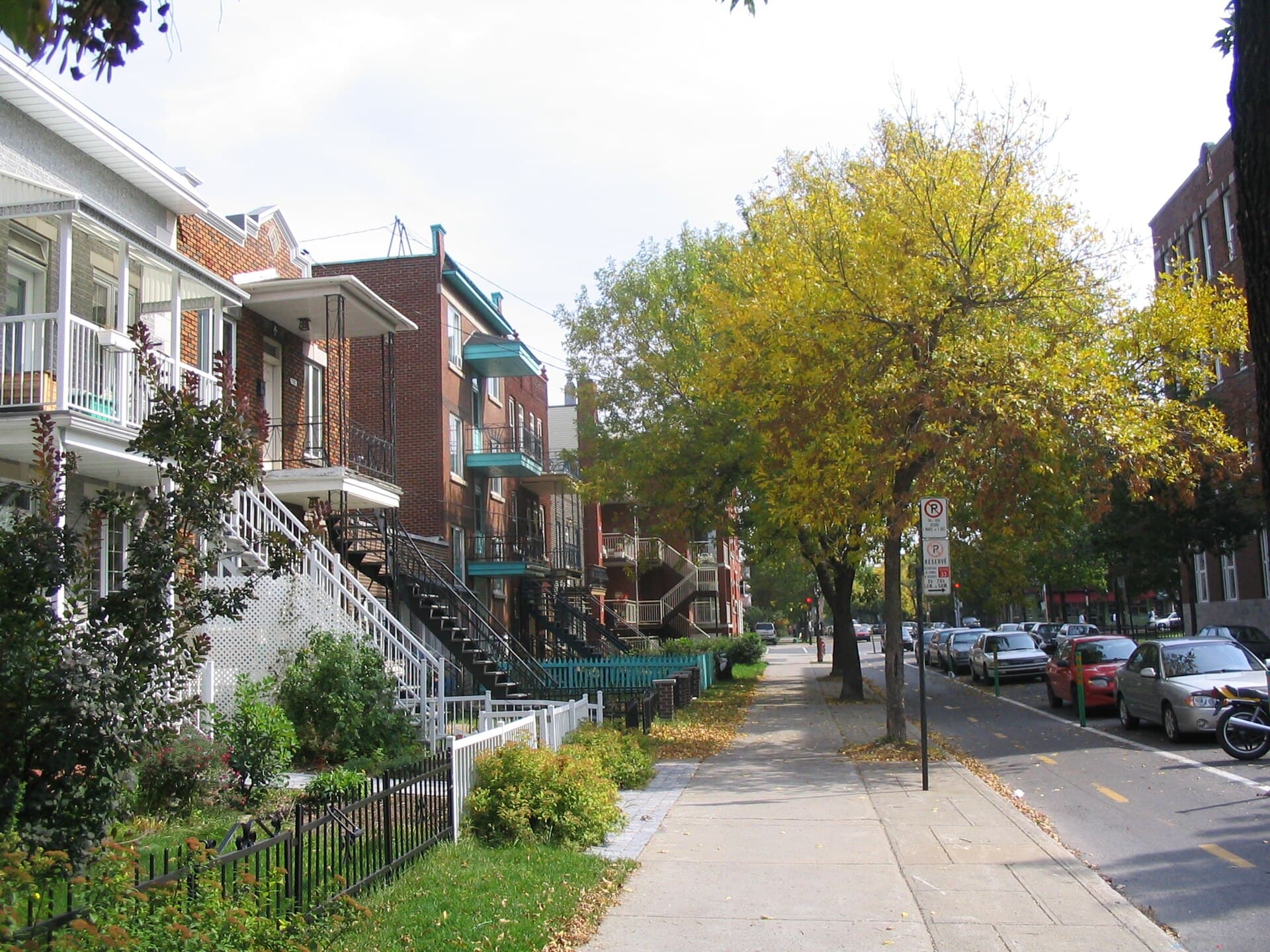
Are you comparing a condo with a unit in a duplex or triplex on the Plateau, in Rosemont or in Villeray? This guide explains the difference between divided co-ownership (copropriété divise) and undivided co-ownership (copropriété indivise) in Montréal: what you are buying, taxes, financing, conversion and repossession of a rented unit. Information checked on November 6, 2026.
At a glance
- Divided co-ownership (the condo): you alone own your private portion and hold a share of the common portions (art. 1010 C.C.Q.). A syndicate of co-owners (syndicat des copropriétaires) manages the building.
- Undivided co-ownership (indivision): you hold a share of the whole building, with no unit of your own and no syndicate.
- Since August 14, 2025, the seller of a condo must give the buyer a certificate from the syndicate (attestation du syndicat, art. 1068.1 C.C.Q.).
- In Montréal, conversion to divided co-ownership is prohibited, unless the borough grants an exemption (dérogation) or all units are occupied by undivided co-owners.
- As a general rule, an undivided co-owner cannot repossess any unit, unless there is only one other co-owner and that person is their spouse (art. 1958 C.C.Q.).
- The down payment depends on the lender: in 2022, National Bank cited a minimum of 5% for divided and 20% for undivided co-ownership.
What is the difference between divided and undivided co-ownership?
In divided co-ownership, the building is split into fractions: each one includes a private portion (partie privative) and a share of the common portions (parties communes). In undivided co-ownership, the property is not divided, and each co-owner holds a share of the whole (art. 1010 C.C.Q.).
- Creation: divided co-ownership is established by the publication of a declaration of co-ownership (déclaration de copropriété, art. 1038). According to the Chambre des notaires, undivided co-ownership arises without any formality as soon as several people buy together.
- Management: a syndicate, which is a legal person, in divided co-ownership (art. 1039). The co-owners themselves in undivided co-ownership (art. 1025).
- Taxes: one assessment unit per private portion in divided co-ownership. A single unit and a single lot number for the whole building in undivided co-ownership.
How does undivided co-ownership work?
Undivided co-owners (indivisaires) manage the building together, under the Civil Code or under a co-ownership agreement (convention d'indivision) that adapts its rules. According to the OACIQ, this agreement is optional but strongly recommended.
The shares are presumed equal (art. 1015). According to Éducaloi, without an agreement, this presumption applies even if the down payments differ, and rents as well as the profit from a sale are split equally. Each co-owner pays the common charges in proportion to their share (art. 1019) and can sell or hypothecate their share (art. 1015).
Management decisions are made by a majority, in number and in shares. Unanimity is required to sell, partition (partage) or hypothecate the whole building, change its use (destination) or alter it substantially (art. 1026).
The co-ownership agreement is made in writing. It can postpone partition for up to 30 years and is renewable (art. 1013). For an immovable, it must be published to be set up against third persons (opposable aux tiers, art. 1014).
How does a condo in divided co-ownership work?
The publication of a declaration of co-ownership creates the divided co-ownership. The co-owners then form a syndicate, a legal person that preserves the building and manages the common portions (art. 1038 and 1039).
Each co-owner has exclusive use of their private portion. The common portions belong to all co-owners (art. 1042 and 1043), and charges are shared according to the relative value of each fraction (art. 1064). The syndicate sets up a contingency fund (fonds de prévoyance) for major repairs and the replacement of common portions, and a self-insurance fund (fonds d'auto-assurance), used in particular to pay deductibles (art. 1071 and 1071.1).
Since August 14, 2025, the implementing regulation of the 2019 law (Bill 16) has been in force:
- Certificate: the seller gives the prospective buyer (promettant acheteur) a certificate from the syndicate, which the syndicate provides within 15 days (art. 1068.1). It summarizes, among other things, the contingency fund, the budget, work and litigation. The obligation applies after the developer loses control (perte de contrôle du promoteur).
- Maintenance log (carnet d'entretien) and contingency fund study (étude du fonds de prévoyance): the syndicate must obtain them (art. 1070 and 1071). The study is redone at least every 5 years and covers at least 25 years. The log is reviewed at least every 5 years, or every 10 years in some small buildings.
- Transition: existing syndicates have three years and one day, that is, at the latest around mid-August 2028, to obtain their log and their first study. If that study shows the fund is insufficient, it must be topped up within 10 years at most.
What changes for taxes and financing?
In undivided co-ownership, the building forms a single assessment unit (Act respecting municipal taxation, s. 34), whereas each condo forms a separate unit (s. 41). Financing an undivided share depends on each lender.
According to the OACIQ, taxes are shared according to each co-owner's share. According to the Chambre des notaires, however, undivided co-owners are solidarily liable (solidairement responsables) for the tax bill: if one does not pay, the others must cover that share.
According to National Bank (July 12, 2022), the minimum down payment is 5% for divided and 20% for undivided co-ownership, and at 20% the buyer does not have to pay CMHC-type mortgage insurance (assurance de type SCHL).
The Chambre des notaires points out that each undivided co-owner can hypothecate their share alone, without the others being liable for that co-owner's default. In practice, lenders often require all co-owners to take part in the loan, and not all lenders agree to finance the purchase of an undivided share.
According to the program La facture (Radio-Canada, October 18, 2022), CMHC had confirmed that several types of undivided co-ownership were not eligible for its insurance, such as a triplex in which each co-owner occupies a unit. A property held by a couple was an exception. No CMHC page consulted confirms the current rule.
Can a plex be converted to divided co-ownership in Montréal?
As a general rule, no. In the Montréal agglomeration, conversion is prohibited, unless the borough grants an exemption or all units are occupied by undivided co-owners.
The Act respecting the Tribunal administratif du logement requires the TAL's authorization to convert a building that has, or has had in the last 10 years, at least one dwelling (s. 51). According to the City, a borough exemption does not replace that authorization.
- Plateau-Mont-Royal: no exemption from the prohibition is possible.
- Villeray–Saint-Michel–Parc-Extension: the borough no longer authorizes conversion.
- Rosemont–La Petite-Patrie: an exemption is possible if the applicant lives in one of the units when the application is filed. Fees according to the City page consulted on November 6, 2026: $3,119 for the analysis and $1,274 per converted unit.
If all units are occupied by undivided co-owners, no municipal exemption is required, but the TAL's authorization is. For a mainly residential building, three quarters of the undivided co-owners, holding 90% of the shares, can decide to switch to divided co-ownership despite any agreement to the contrary (art. 1031 C.C.Q.).
Can you repossess a rented unit in a plex held in undivided co-ownership?
As a general rule, no. The owner of an undivided share cannot repossess (reprise de logement) any unit in the building, unless there is only one other owner and that person is their spouse (art. 1958 C.C.Q.).
According to the TAL, common-law spouses (conjoints de fait) also benefit from this exception.
The law also protects certain elderly tenants (art. 1959.1). Before buying a share to live in, check which unit will be vacant.
What to check before buying in divided or undivided co-ownership
- The exact type: a fraction in divided co-ownership or an undivided share.
- Condo: the syndicate's certificate, the declaration of co-ownership, the maintenance log, the contingency fund study and the statement of charges owing (état des charges dues).
- Undivided share: a published co-ownership agreement, each co-owner's share, exclusive use rights and pre-emption rights (droits de préemption).
- Undivided share: a waiver by the other undivided co-owners of their pre-emption or redemption right (droit de retrait), which the seller's broker can obtain from the outset (OACIQ).
- The tax bill and how it is shared.
- Written confirmation from the lender: down payment, mortgage loan insurance, involvement of the other co-owners.
- Current leases, if you want to live in a rented unit.
- Building insurance in undivided co-ownership: no official rule could be confirmed, so check with your notary and your insurer.
Frequently asked questions
What are the advantages and disadvantages of undivided co-ownership?
On the plus side: undivided co-ownership arises without formality, an agreement can adapt the rules and each co-owner can sell or hypothecate their share. Points to watch: financing that is harder with some lenders, solidary liability for the tax bill according to the Chambre des notaires, unanimity for major decisions and very limited repossession of a rented unit.
Can my co-owners buy back my share if I sell it?
Yes, through the right of redemption (droit de retrait). If a third party buys your share, any other undivided co-owner can exclude that buyer by reimbursing the price and costs, within 60 days of learning of the sale and no later than one year after the acquisition (art. 1022). This right does not apply if the published agreement provides for pre-emption rights.
Can I force the sale or partition of the plex?
In principle, yes: no one is required to remain in indivision (art. 1030), unless partition is postponed by an agreement, a will, a judgment or the law. The court can maintain indivision for up to two years to avoid a loss (art. 1032). The others can also keep the building by allotting you your share (art. 1033).
What does article 1069 of the Civil Code of Québec say?
The buyer of a condo must pay the common charges that are unpaid at the time of purchase, with interest. If the buyer asks the syndicate for a statement of charges owing and does not receive it within 15 days, the buyer is not required to pay them.
Sources, method and limits
Sources: Civil Code of Québec, arts. 1010 to 1073, 1958 and 1959.1; Regulation CCQ, r. 8.01; S.Q. 2019, c. 28; Act respecting the Tribunal administratif du logement, s. 51; Act respecting municipal taxation, ss. 34 and 41; Québec.ca, Mesures applicables aux copropriétés divises; City of Montréal, Dérogation pour convertir un immeuble en copropriété divise; TAL, Reprise de logement; OACIQ, Vente ou achat d'une copropriété indivise; Chambre des notaires, Achat et vente d'une copropriété indivise; Éducaloi, Quel type d'habitation acheter au Québec; National Bank, Copropriété divise ou indivise (July 12, 2022); Radio-Canada, La facture (October 18, 2022). Method: each fact was checked at its source on November 6, 2026.
Limits: this guide provides general information and does not replace legal or tax advice. Lender conditions vary, and some sources date from 2022. The mid-August 2028 deadline is based on a calculation from the law. For a specific case, consult a notary or a lawyer. Written by Équipe Lefrançois.

Planning a real estate purchase in Montreal?
Our team can help you find the property that matches your project.
Related content

Mortgage Renewal: How to Compare, Negotiate and Avoid Penalties
The 21-day statement, shopping around, switching lenders and prepayment penalties: how to prepare for your mortgage renewal, according to the FCAC.
2026 Rent Increases and the TAL's New Method: What It Means for a Montreal Plex
A 3.1% base percentage, adjustments for taxes, insurance and major work, strict notice deadlines: what duplex and triplex buyers and owners need to know.

Pre-Purchase Inspection: What to Do After the Report (Negotiate, Deadlines, Withdraw)
Clause 8.1, notice to the seller within four days, the Amendments form and RBQ-certified inspectors: your options after the inspection, according to the OACIQ.