
Condo, Duplex or House in Montreal: How to Choose Based on Your Budget and Plans
Financing, recurring costs, responsibilities and resale: a practical comparison of condos, owner-occupied plexes and houses for buying in Montreal.
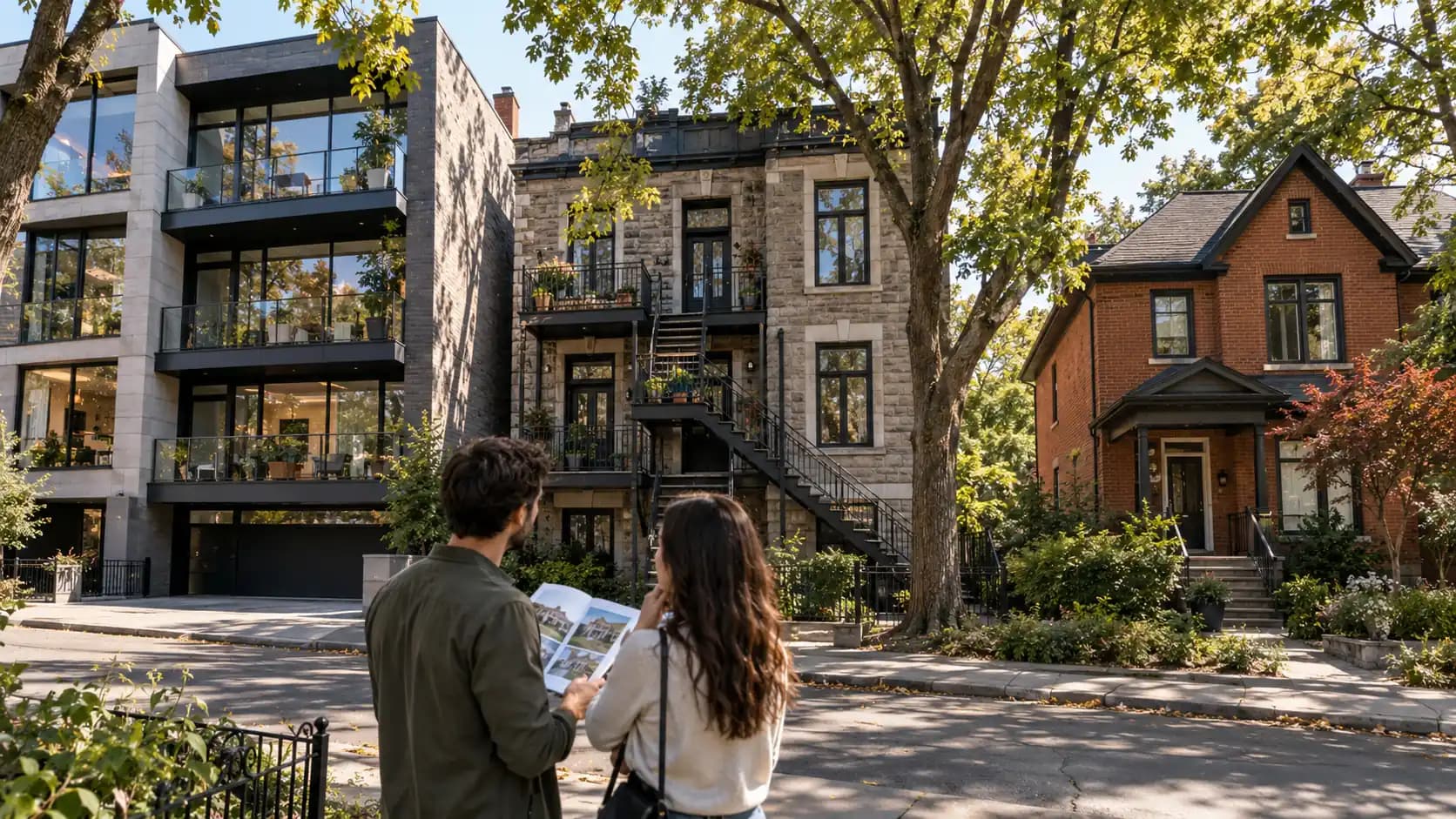
Condo, duplex or house: in Montreal, the question is rarely that simple. The right choice depends on your budget, your tolerance for renovations, your time horizon and whether you want to be a landlord. This guide compares the three options on what really matters: financing, recurring costs, responsibilities and resale.
At a glance
- Condo: usually a lower entry cost and shared maintenance, but condo fees and decisions made collectively.
- Owner-occupied duplex or triplex: rental income that helps carry the mortgage, in exchange for a landlord's role governed by the TAL.
- House: full autonomy and a yard, but every cost and every repair is yours.
- For an owner-occupied 1- to 4-unit property insured by CMHC, the minimum down payment is 5% of the first $500,000 and 10% of the rest for 1 or 2 units, and 10% for 3 or 4 units.
Financing: what CMHC rules provide
According to CMHC (https://www.cmhc-schl.gc.ca/professionnels/financement-de-projets-et-financement-hypothecaire/assurance-pret-hypothecaire/aph-po-et-petits-immeubles-locatifs/achat), mortgage loan insurance for owner-occupants covers 1- to 4-unit properties where at least one unit is occupied by the owner, for a purchase price under $1,500,000.
Minimum down payment and maximum loan-to-value ratio, CMHC-insured owner-occupied loans
- 1 unit (condo or house) — Minimum down payment: 5% of the first $500,000 + 10% of the rest; Maximum loan-to-value: 95%
- 2 units (duplex) — Minimum down payment: 5% of the first $500,000 + 10% of the rest; Maximum loan-to-value: 95%
- 3 or 4 units (triplex, fourplex) — Minimum down payment: 10%; Maximum loan-to-value: 90%
An insurance premium is added to the loan: according to CMHC, it ranges from 0.60% (loan-to-value of 65% or less) to 3.10% (85.01% to 90%) of the loan amount. If you don't live in the building, it is a rental investment: the CMHC Multi-Unit rental product (https://www.cmhc-schl.gc.ca/professionnels/financement-de-projets-et-financement-hypothecaire/assurance-pret-hypothecaire/aph-po-et-petits-immeubles-locatifs/immeubles-locatifs) then caps the loan-to-value ratio at 80%. Your lender may also have its own requirements, including how rental income is counted.
Recurring costs to compare
Main recurring costs by property type
- Municipal and school taxes — Condo: Yes, for your unit; Owner-occupied duplex or triplex: Yes, for the whole building; House: Yes
- Condo fees (contingency fund included) — Condo: Yes; Owner-occupied duplex or triplex: No (unless the plex is a divided co-ownership); House: No
- Insurance — Condo: Contents and liability; the syndicate insures the building; Owner-occupied duplex or triplex: The whole building, as a landlord; House: The whole building
- Maintenance and major work — Condo: Shared through the syndicate and fees; Owner-occupied duplex or triplex: Yours, for every unit; House: Yours
- Income — Condo: None (unless you rent out your unit); Owner-occupied duplex or triplex: Rent from the other units; House: None
In every case, budget for the welcome tax at the time of purchase. Our guide to the Montreal welcome tax in 2026 explains the calculation and the credit available to first-time buyers.
The condo: simplicity and shared rules
In a divided co-ownership, you own your private portion and co-own the common areas. Building maintenance is managed by the syndicate and funded by condo fees. In return, you must follow the declaration of co-ownership and the decisions of the general meeting, which can cover rentals, renovations or pets.
Before buying, the state of the contingency fund and the maintenance log is critical. Syndicates' obligations were strengthened by Bill 16: see our article Bill 16 and the condo market. An underfunded reserve can mean a special assessment after you buy.
The duplex or triplex: income, and responsibilities
Living in one unit and renting out the others is a very Montreal approach. Rents help pay the mortgage and taxes, and owner-occupied financing makes a duplex accessible with a down payment comparable to a house.
In exchange, you become a landlord: tenant selection, maintenance, notice deadlines and rent-setting rules. Since January 1, 2026, the TAL has applied a new calculation method, explained in our article on 2026 rent increases and plexes. Before buying, the current leases and the building's history matter as much as the inspection.
The house: autonomy and a yard
A house offers the most freedom: layout, extensions, a yard, no co-owners' meetings. It also calls for the most planning, since the roof, foundation, drainage and mechanical systems are entirely your responsibility. A thorough pre-purchase inspection and a reserve for repairs are essential.
How to choose: a few questions to ask yourself
- What down payment can you put together, and what monthly payment is comfortable once taxes and fees are included?
- Are you ready to manage tenants and follow the TAL's rules?
- How long do you plan to stay? A short horizon often favours the property that is easiest to resell in your target area.
- How much room do you want renovations to take in your daily life?
- Which area are you targeting? In Montreal, the supply of each property type varies widely from one neighbourhood to the next.
Frequently asked questions
What is the minimum down payment to buy a duplex in Montreal?
For an owner-occupied duplex insured by CMHC, the minimum down payment is 5% of the first $500,000 and 10% of the rest, for a price under $1,500,000. For an owner-occupied triplex or fourplex, it is 10%.
Can you buy a plex without living in it?
Yes, but it is then a rental investment. CMHC's rental product caps the loan-to-value ratio at 80% for 2- to 4-unit properties not occupied by the owner, which means a down payment of at least 20%.
Do condo fees replace the upkeep of a house?
Partly. They fund the upkeep of the common areas and the contingency fund, but the upkeep of your private portion remains your responsibility, and a special assessment is possible if the fund is insufficient.
Related reading
Sources, method and limitations
- CMHC, "SCHL Achat" (in French) (https://www.cmhc-schl.gc.ca/professionnels/financement-de-projets-et-financement-hypothecaire/assurance-pret-hypothecaire/aph-po-et-petits-immeubles-locatifs/achat): eligibility, minimum down payment, loan-to-value ratios and premiums for owner-occupants.
- CMHC, "SCHL Immeubles locatifs" (in French) (https://www.cmhc-schl.gc.ca/professionnels/financement-de-projets-et-financement-hypothecaire/assurance-pret-hypothecaire/aph-po-et-petits-immeubles-locatifs/immeubles-locatifs): 2- to 4-unit properties not occupied by the owner.
- TAL, "Augmentation de loyer" (in French) (https://www.tal.gouv.qc.ca/fr/reconduction-du-bail-et-fixation-de-loyer/augmentation-de-loyer): 2026 rent-fixing criteria.
CMHC rules describe mortgage loan insurance. Lenders and other insurers may apply their own criteria. This article compares property categories; it does not replace an analysis of your finances by a mortgage professional. Information current as of October 5, 2026.
Torn between a condo, a plex or a house in a specific area? Talk to a broker on our team or call us at 514-700-1221.

Planning a real estate purchase in Montreal?
Our team can help you find the property that matches your project.
Related content
Montreal Welcome Tax in 2026: Calculation, Exemptions and the First-Time Buyer Credit
Montreal's 2026 transfer-duty rates, worked examples and Quebec's new tax credit of up to $5,875 for first-time buyers: what to plan for in your purchase budget.
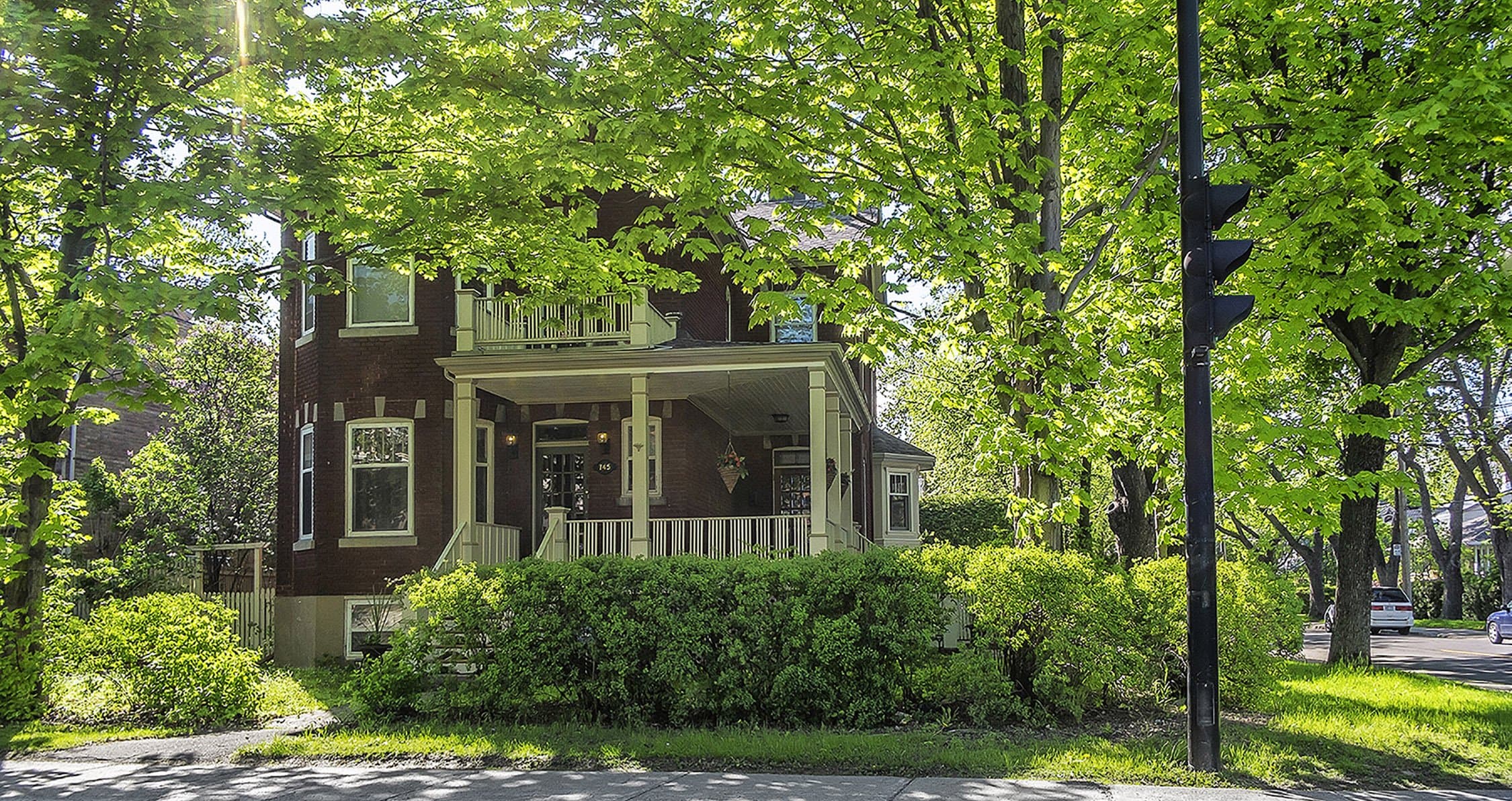
Why Ahuntsic Remains One of the Most Consistent Areas to Settle Down Long Term
In a Montreal where densification is accelerating, Ahuntsic retains a rare residential stability. For a long-term plan, this consistency becomes a genuine strategic advantage.
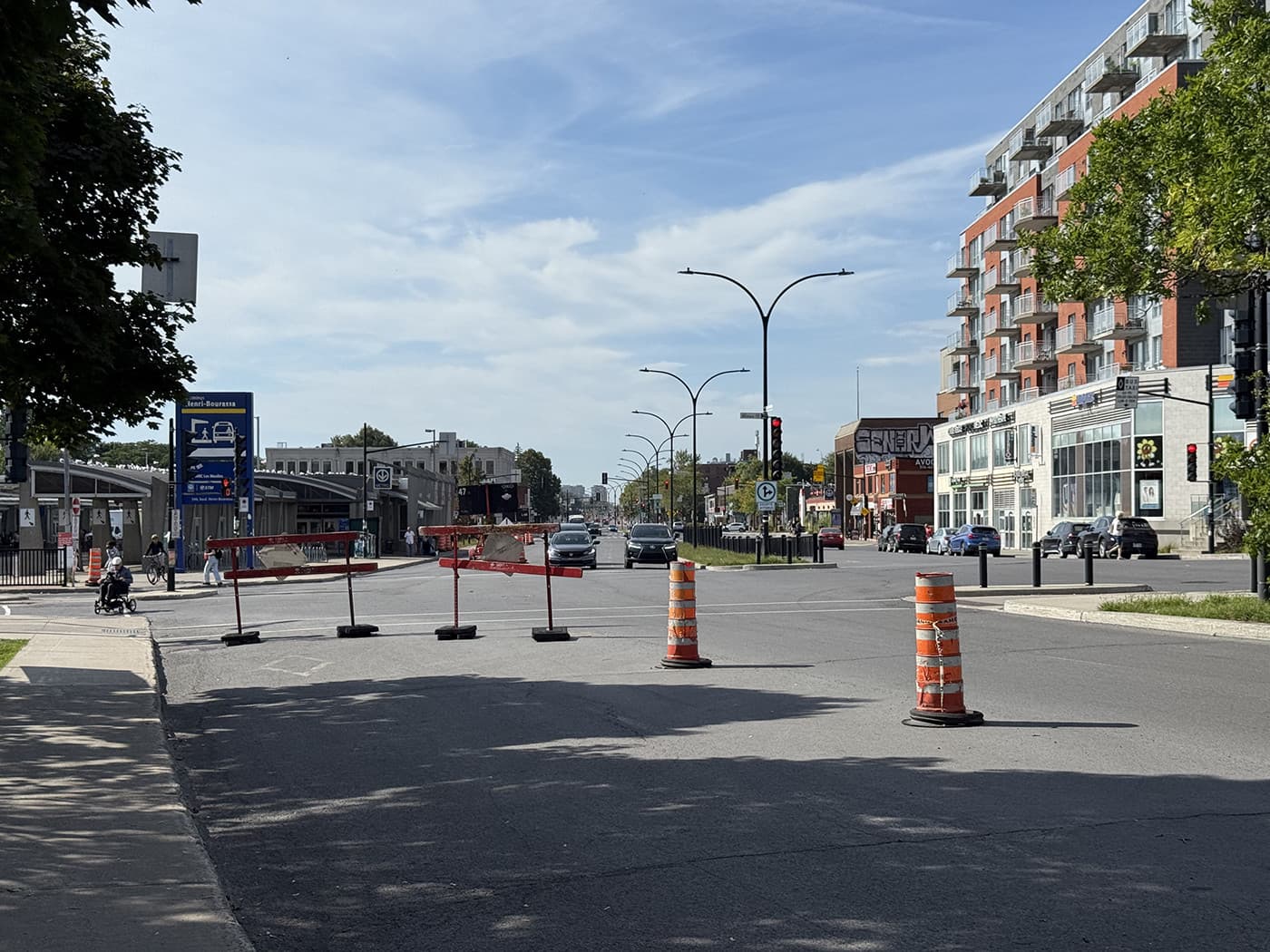
Going green in Ahuntsic: what impact on your property value… and your taxes?
Ahuntsic's green shift is improving quality of life through bike paths, trees and safer spaces. The result: property values are climbing… but so are property taxes, a direct reflection of this new appeal.