
Selling an Estate Property in Quebec: The Liquidator's Guide
Liquidator's powers, will search, declaration of transmission, tax, tax certificates and legal warranty: the steps to sell an estate property in Quebec, and what buyers should check.

This guide is for liquidators and heirs selling the house or condo of a deceased person, in Montréal or elsewhere in Quebec. It covers the power to sell, the steps that come first, income tax, tax certificates and the legal warranty, with a section for buyers. Information checked on November 6, 2026.
At a glance
- Unless the will gives the liquidator that power, the liquidator must obtain the heirs' consent or, failing that, the court's authorization to sell an immovable (Civil Code of Québec, arts. 778, 802 and 804).
- Before the sale: a will search, probate (vérification) of a non-notarial will, then a notarial declaration of transmission (déclaration de transmission), published before title passes.
- At death, the property is deemed sold at its fair market value. A principal residence must be designated (forms T1255 and TP-274), even if the gain is exempt.
- Distributing property without the certificates from the CRA (TX19) and Revenu Québec (MR-14.A) can make the liquidator personally liable.
- The seller's declarations form is mandatory: the liquidator answers to the best of their knowledge and explains the gaps in section D15.
- Buyers check the liquidator's powers, the declaration of transmission and the authorization of the heirs or the court.
Can the liquidator sell the house without the heirs' agreement?
Only if the will gives the liquidator that power, for example full administration (pleine administration). Otherwise, the liquidator needs the heirs' consent or, failing that, the court's authorization.
By default, the liquidator has only simple administration of the property (art. 802). The liquidator may sell alone a movable that is likely to perish or is costly to keep, but not an immovable (art. 804). The testator can grant full administration (art. 778), which allows a sale (art. 1307).
According to the OACIQ, under simple administration, written authorization is needed from all the heirs, or from the legatees by particular title who receive the property. If there are several liquidators, all of them sign the brokerage contract and the promises to purchase. Without a will, the heirs can appoint a liquidator by majority vote (art. 785), but must unanimously authorize that liquidator to sell the property.
What steps come before selling an estate house?
Four steps come before the sale. According to the OACIQ, probate of a non-notarial will can take several months on its own.
- Will search (recherche testamentaire): a single request to the joint service of the Chambre des notaires and the Barreau, with a death certificate or a copy of the act of death from the Directeur de l'état civil. About $30 to $40; the certificate is mailed within 2 to 3 weeks depending on the date of death.
- Probate (vérification) of a holograph will or a will made in the presence of witnesses, by a notary or the Superior Court, for a fee. A notarial will is exempt.
- Publication of the liquidator's designation in the register of personal and movable real rights (RDPRM) and, for the property, in the land register (registre foncier) (art. 777).
- Declaration of transmission: a notary drafts it as a notarial act en minute (art. 2998) and registers it in the land register. According to the OACIQ, it must be signed and published before title passes to the buyer.
According to the OACIQ, a broker cannot act in the transaction before the will search is done, or sign a brokerage contract before probate is complete; ideally, the broker already has the declaration of transmission.
In parallel: inventory and deliberation
The liquidator must make an inventory (art. 794), signed before two witnesses or a notary, then publish a notice of closure of inventory (avis de clôture d'inventaire) in the RDPRM and in a newspaper in the deceased's locality (art. 795). The property is generally listed at its market value; you can call on a chartered appraiser or a local real estate broker. Debts are paid after this notice.
Each heir has 6 months from the day their right opened to accept or renounce the succession, a deliberation period (délai de délibération) extended as needed to give them 60 days after the inventory is closed (art. 632). Purely conservatory acts do not, by themselves, amount to acceptance (art. 642).
Unsettled point: no official source consulted says whether consenting to the sale of the property during this period amounts to acceptance. Have a notary confirm this.
What tax applies when an estate house is sold?
At death, the property is deemed sold at its fair market value. The gain on a principal residence can be fully or partly exempt, provided the property is designated.
According to the CRA, this gain is reported on Schedule 3 of the final return. Property that vests in a surviving spouse or common-law partner resident in Canada, no later than 36 months after death, may not generate a gain.
Even if the whole gain is exempt, Schedule 3 and form T1255 must be completed. In Quebec, the deemed disposition at death is reported on line 139, and the residence is designated with form TP-274 and Part A of Schedule G, after doing so with the CRA.
If the estate then sells the property, the gain is reported on the estate's T3 return; if an heir sells after receiving it, on the heir's own T1. The Quebec rule (TP-646 return) could not be verified: confirm it with an accountant.
Are the tax certificates needed before selling the house?
Official sources tie these certificates to the distribution of property and, for Revenu Québec, to the payment of debts. They do not say whether the certificates are needed before the sale, or how the deceased's mortgage is then paid off. Ask the notary these questions.
The CRA clearance certificate (certificat de décharge) is requested with form TX19, after receiving the notices of assessment and paying or securing the balances. The CRA acknowledges receipt within 45 days; the review can take up to 120 days if the file is complete. Without a certificate, the liquidator is personally liable for unpaid amounts, up to the value of the property distributed.
At Revenu Québec, the certificate authorizing distribution (certificat autorisant la distribution, form MR-14.A) is mandatory before distributing property, for example a house, and before paying debts. Certain urgent expenses (funeral costs, electricity, heating, insurance, urgent repairs) can be paid before, up to $12,000. Distributing without the certificate makes the liquidator personally liable up to the value of the property distributed, generally for 4 years. According to Éducaloi, the certificates can take several weeks or even several months.
How does the liquidator fill out the seller's declarations?
To the best of their knowledge. In section D15, the liquidator states their status and why they cannot answer certain questions.
According to the OACIQ, the Declarations by the Seller of the Immovable form (Déclarations du vendeur sur l'immeuble: DV, or DVD for divided co-ownership) is mandatory for an estate, which is entitled to the same protection the deceased had while alive.
The Civil Code allows the legal warranty of quality (garantie légale de qualité) to be excluded (art. 1732), but the seller cannot escape liability for defects they knew of or could not have been unaware of, unless the buyer buys at their own risk from a non-professional seller (art. 1733). For the OACIQ, an exclusion can be considered for an estate, since the seller has limited knowledge of possible defects.
On its page updated September 23, 2026, the OACIQ strongly recommends that brokers stop using the wording "without legal warranty, at the buyer's own risk" (sans garantie légale à ses risques et périls), which breaks the chain of warranties from previous sellers according to the Court of Appeal (Blais c. Laforce, 2022). It favours a partial exclusion that specifies the excluded warranty and covers only the immediate seller (standard clause 3.5). For this choice, see our article on the legal warranty at the bottom of the page.
Buying a house sold by an estate: what should you check?
Check who signs and what proves their authority. According to the OACIQ, if signatures are missing, the transaction is null.
- Signatories: with no liquidator appointed, all the heirs; under full administration, the liquidator or liquidators; under simple administration, the liquidator authorized by all the heirs concerned.
- Documents: certified copy or extract of the will, written authorization from the heirs or the court and, if there is no will, the notice of designation of the liquidator.
- Declaration of transmission: published before title passes, with a mention of probate if the will was holograph or made in the presence of witnesses.
- Sale without warranty: you will have recourse only if you prove the seller deliberately hid a known defect from you. The OACIQ strongly recommends a more thorough pre-purchase inspection; the price offered should also reflect the exclusion.
What to check before listing the house
- Will search done, and the will probated if it is not notarial.
- Power to sell established (full administration, written authorization from the heirs or the court) and all liquidators available to sign.
- Notary hired for the declaration of transmission, publication date known.
- Inventory under way, with the property's market value.
- Answer from the notary on the tax certificates and on paying off the mortgage.
- Insurer notified of the death and the vacancy, requirements known for an unoccupied home.
- Municipal taxes and utilities checked with the municipality and the providers.
- Seller's declarations form completed, with explanations in D15.
Frequently asked questions
What are the notary fees to sell an estate house?
No official amount was found for the declaration of transmission or the probate of the will. Ask the notary for a written quote.
Can the house be sold before the estate is settled?
Yes, if the liquidator has the power to sell and the declaration of transmission is published before title passes. Partition among the heirs waits until the liquidation is over (art. 836, cited by the OACIQ).
What if the heirs disagree on the sale?
According to the OACIQ, the heirs who agree with the sale must ask the court for authorization.
Does the brokerage contract end when the seller dies?
No, according to the OACIQ. The DV form the seller completed is given to buyers unchanged, and a promise to purchase the seller had accepted may bind the heirs.
Sources, method and limits
Sources, each checked on November 6, 2026: Civil Code of Québec (LégisQuébec), arts. 632, 642, 777, 778, 785, 794, 795, 802, 804, 1307, 1732, 1733 and 2998; OACIQ, Guide des pratiques professionnelles ("Les successions" section) and pages on forms in an estate, the seller's death and the legal warranty; Chambre des notaires and Barreau, wills registers; Éducaloi, articles on the liquidator, will searches and estate liquidation; Québec.ca, probate of a will and the liquidator's steps; Registre foncier, "Déclaration de transmission" fact sheet; CRA, capital gains at death and clearance certificate; Revenu Québec, line 139, principal residence, certificate authorizing distribution and distribution of property.
Limits: this guide provides general information; it is not legal or tax advice. For a specific case, consult a notary or a lawyer, and an accountant for tax matters. Written by Équipe Lefrançois.

Thinking about selling your property?
Our team can evaluate your property and support you at every step of the sale.
Related content

What's Changing in the Town of Mount Royal: Zoning, the Beaumont PPU, Construction and Free Water-Damage Inspections
New acquired-rights rules, parking for multi-unit buildings, the postponed Beaumont PPU, Hydro-Québec and Côte-de-Liesse work, free water-damage inspections: what is changing in the Town of Mount Royal for owners and buyers.

What's Changing in Ahuntsic–Cartierville: the Chabanel Area, Boulevard Henri-Bourassa and 2027 Taxes
Major housing projects in the Chabanel area, the end of the Henri-Bourassa work in spring 2027, the borough's 2027 budget, schools and parks: what is changing in Ahuntsic–Cartierville for owners and buyers.
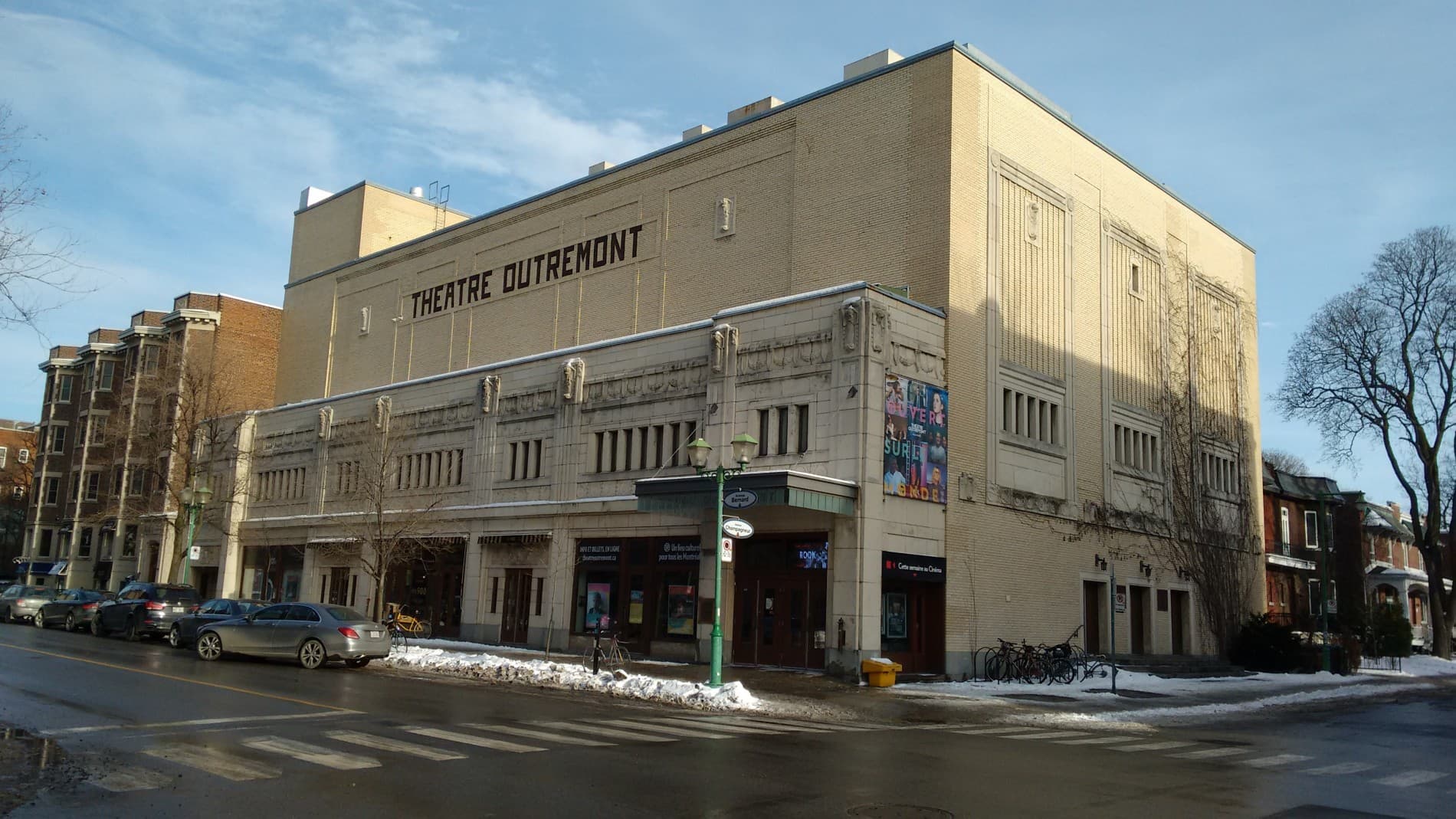
What's Changing in Outremont: 2027 Local Tax, Zoning Overhaul and MIL Campus Construction
2027 local tax tabled, new zoning up for consultation in early 2027, MIL campus construction until 2029, restoration of the Holmes-McFarlane house: what is changing in Outremont for owners and buyers.