
Second Quarter in Montreal: More Choice, but Good Properties Still Sell Quickly
The second quarter of 2026 confirms a change of pace in Montreal’s real estate market. Buyers have more properties to compare, and sales are slowing.

So we are facing neither a market that fully favours sellers nor a widespread reversal in favour of buyers. Rather, we are entering a more selective market, where the asking price, the property’s condition and the quality of its marketing make a considerable difference.
Sales slow in the spring
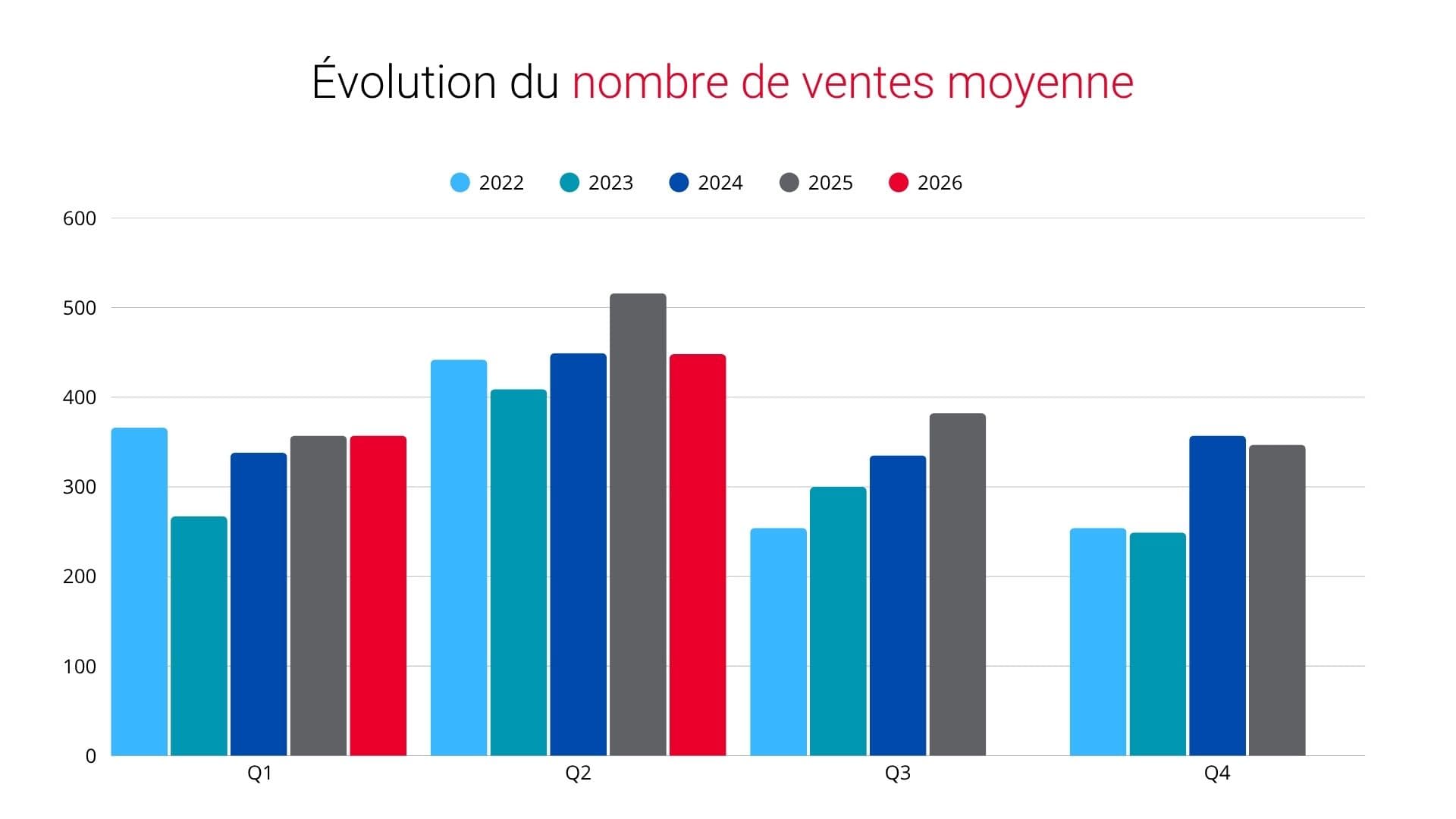
From April to June 2026, 1,345 sales were recorded in the market analyzed, compared with 1,549 in the second quarter of 2025.
That is a decrease of 13.2%.
The slowdown was evident in each of the quarter’s three months:
- April: 458 sales, down 10.5%;
- May: 472 sales, down 15.3%;
- June: 415 sales, down 13.5%.
The market still benefited from spring’s seasonal activity. Sales increased compared with the first quarter. This acceleration, however, was much less pronounced than the previous spring.
In other words, buyers are still there, but they are taking more time before submitting an offer.
More properties on the market
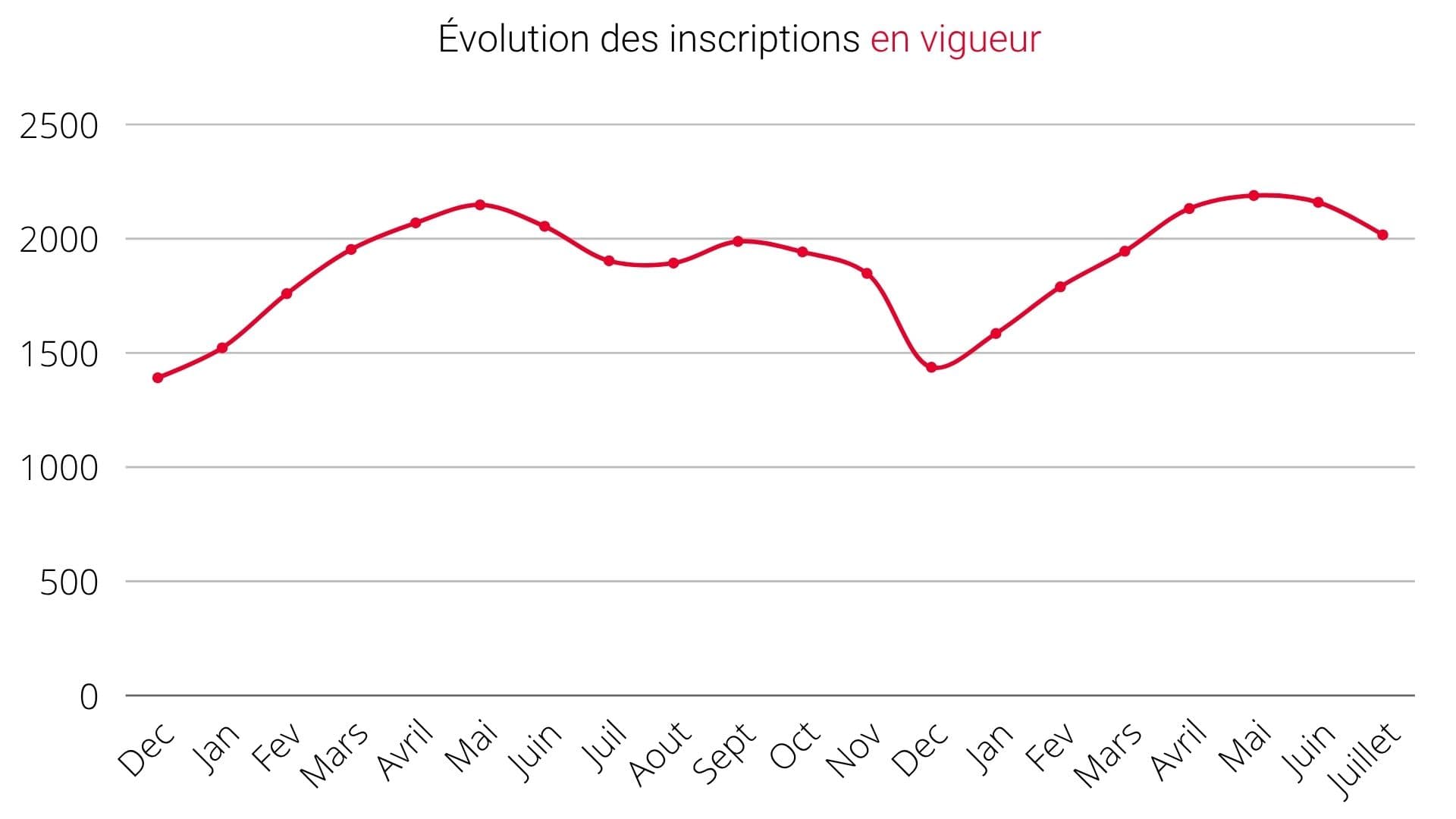
While sales were declining, the average number of active listings rose from about 2,090 in the second quarter of 2025 to 2,160 in 2026.
This 3.3% increase may seem modest. It becomes more significant, however, when combined with the drop in transactions.
In April, about 21.5% of available properties found buyers. The ratio remained similar in May, before falling to 19.2% in June.
The theoretical number of months of inventory thus went from about four months in spring 2025 to nearly five months in 2026.
This means buyers have more choice and can compare properties, renovations, locations and asking prices more extensively.
For sellers, it also means that it is harder to rely solely on scarcity to generate a sale.
Why are prices holding up despite lower sales?
The average of the quarter’s monthly median prices reached about $838,000, compared with $801,000 for the same period in 2025.
That represents an increase of about 4.6%.
At first glance, this increase might seem to contradict the slowdown in transactions. It does not necessarily.
The median price fluctuated considerably during the quarter:
- $878,750 in April;
- $785,500 in May;
- $850,000 in June.
These swings do not mean that the value of every Montreal property fell in May before rising again in June. They mainly reflect the mix of sales completed each month.
When more high-end homes are sold, the median price rises. When transactions involve more condominiums, smaller properties or homes needing work, it falls.
So it is important to avoid drawing conclusions from a single figure.
The key trend is rather this: despite less intense demand, the properties that find buyers continue to sell at high values.
A two-speed market
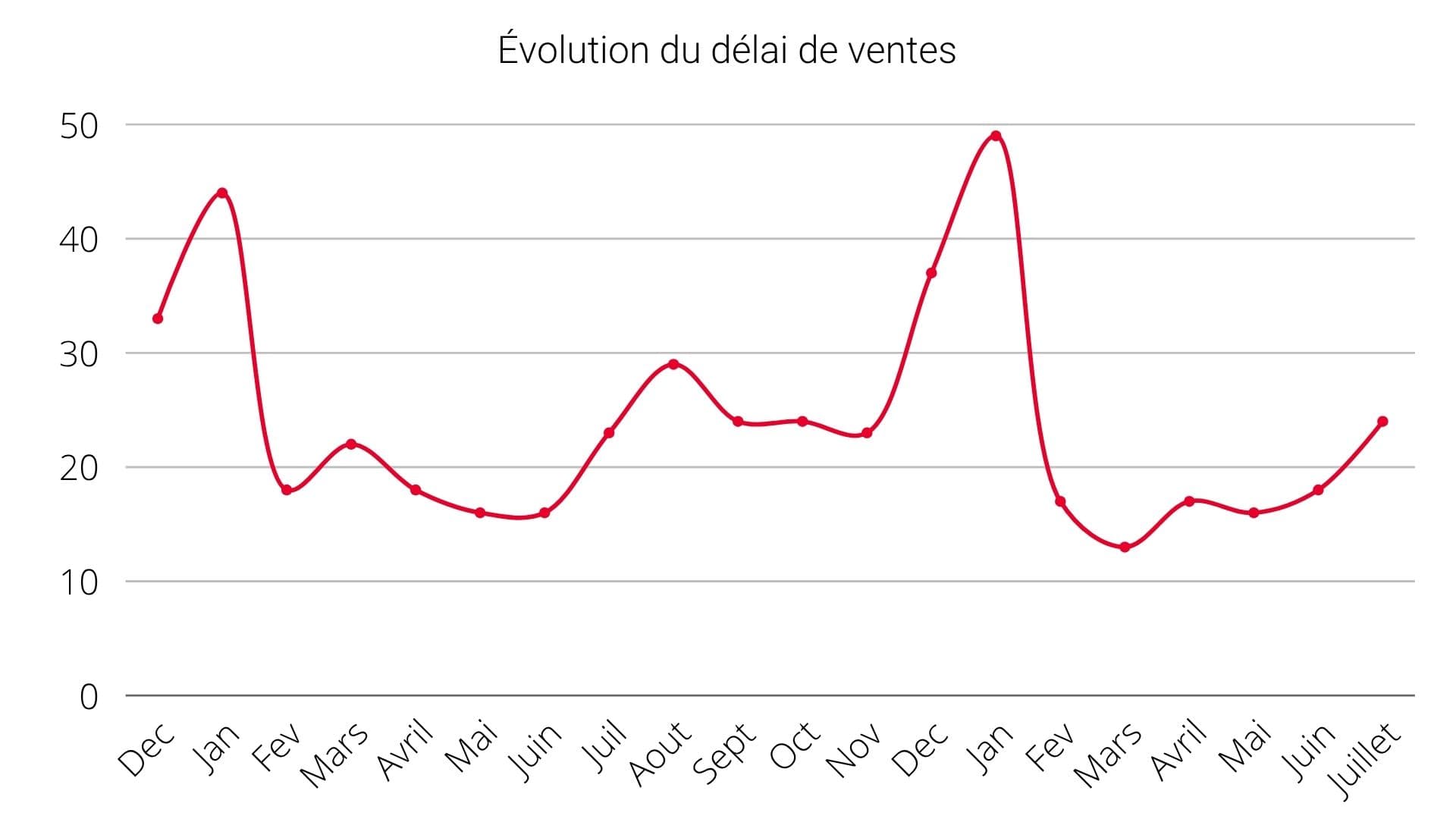
The median selling time was about 17 days in the second quarter, practically the same result as in 2025.
This may seem surprising in a context where sales are declining and inventory is increasing.
It should be remembered, however, that the median selling time is based on properties that sold. It does not directly measure the time spent on the market by properties that remain available.
Two realities can therefore coexist.
Well-located properties that are carefully prepared and listed at a consistent price can still receive offers quickly.
Conversely, overpriced properties or those involving significant compromises are likely to stay on the market longer, even when overall statistics indicate a relatively short selling time.
The market no longer automatically rewards every listing. It mainly rewards properties whose positioning matches buyers’ current expectations.
What this means for sellers
In this context, pricing strategy becomes even more important.
The first weeks after a property goes on the market remain decisive. This is generally when the property enjoys its greatest visibility among active buyers.
A price that is too high can reduce the number of showings and give the impression that something is wrong with the property. When the price is finally adjusted several weeks later, buyers may become more cautious or try to negotiate harder.
The asking price must therefore be set based on recent sales, but also on competing properties currently available.
You also need to take into account listings that have had a price reduction, those that have stayed on the market for a long time and those that were withdrawn without selling.
In a more selective market, the property’s presentation, the quality of its documents, the distribution strategy and the speed of follow-ups can also directly influence the outcome.
What this means for buyers
For buyers, the increase in inventory creates more opportunities.
They can take the time to compare several properties and keep important conditions in place, particularly regarding financing and inspection.
Properties that have been active for several weeks may offer some room for negotiation, especially when they have already had a price reduction or face several comparable competitors.
This does not mean, however, that all properties are negotiated the same way.
A renovated, well-located house listed at the right price can still attract several buyers. Conversely, a condominium in a building where several similar units are for sale will generally give the buyer more leverage.
The strategy must therefore be tailored to each property, not just to overall market statistics.
A more balanced, but still demanding, market
The second quarter of 2026 does not mark a fall in Montreal’s real estate market.
Rather, it marks a transition.
Buyers are more selective. More properties are available. Sales are declining, but prices remain firm and well-positioned properties continue to sell quickly.
For sellers, the main risk now is overestimating demand.
For buyers, the main risk is believing that the slowdown automatically gives access to significant discounts on every property.
In both cases, a precise analysis of the area, the property type and recent transactions remains essential.
Thinking of selling or buying in Montreal?
Overall statistics help you understand the direction of the market. A property’s real value, however, depends on much more specific factors: its location, its condition, its size, its renovations and the properties it is competing with directly.
Contact Équipe Lefrançois for an analysis tailored to your property and your area.
Need help interpreting the market for your project?
Our team can help you understand what this data actually means for your project.
Related content

Verdun and Nuns' Island Real Estate Market: What Q2 2026 Reveals
Single-family prices up sharply, condo prices flat but more units on the market: Centris figures for Q2 2026 show two very different markets in Verdun.

Condos: Ahuntsic Holds Up While Montreal Catches Its Breath
While Montreal’s condo market is slowing, Ahuntsic continues to show resilience, with rising prices and demand that is absorbing the additional supply.

Sales down, prices up: what the Montréal real estate market is really saying in May 2026
Listings up, sales slightly down, a median price that remains firm and short selling times: here is what the numbers reveal about Montréal's single-family real estate market in spring 2026.