
Does your home influence the way you think?
Why some homes feel instantly natural… and others are harder to leave

When a buyer hesitates in front of a property without being able to explain why, we often call it intuition. When a family struggles to leave a house they have lived in for several decades despite favourable financial logic, we call it attachment.
What if these reactions ran deeper than they appear?
We tend to think of a house as a place where life unfolds.
Yet when we turn to contemporary philosophy and the cognitive sciences, we discover a rather surprising idea:
The environments we live in may also play a part in certain ways of perceiving, thinking… and inhabiting the world.
In other words:
Choosing a property may sometimes mean choosing more than a location or an asset.
Why some places speak to us before we even know why
Some properties feel instantly natural. Others trigger a hesitation that is hard to explain, even when all the objective criteria seem to be met.
After a visit, buyers sometimes talk about a “good feeling” or, on the contrary, a vague impression that “something isn't working.” Yet it is rarely easy to put this reaction into words. Perhaps because a house is never merely observed.
It is moved through.
We climb its stairs thousands of times. We walk around its kitchen island. We learn, unconsciously, where the sunlight falls at certain hours. We end up opening a drawer without thinking. Little by little, the body attunes itself to the space. A house is therefore not merely occupied: it is continually practised.
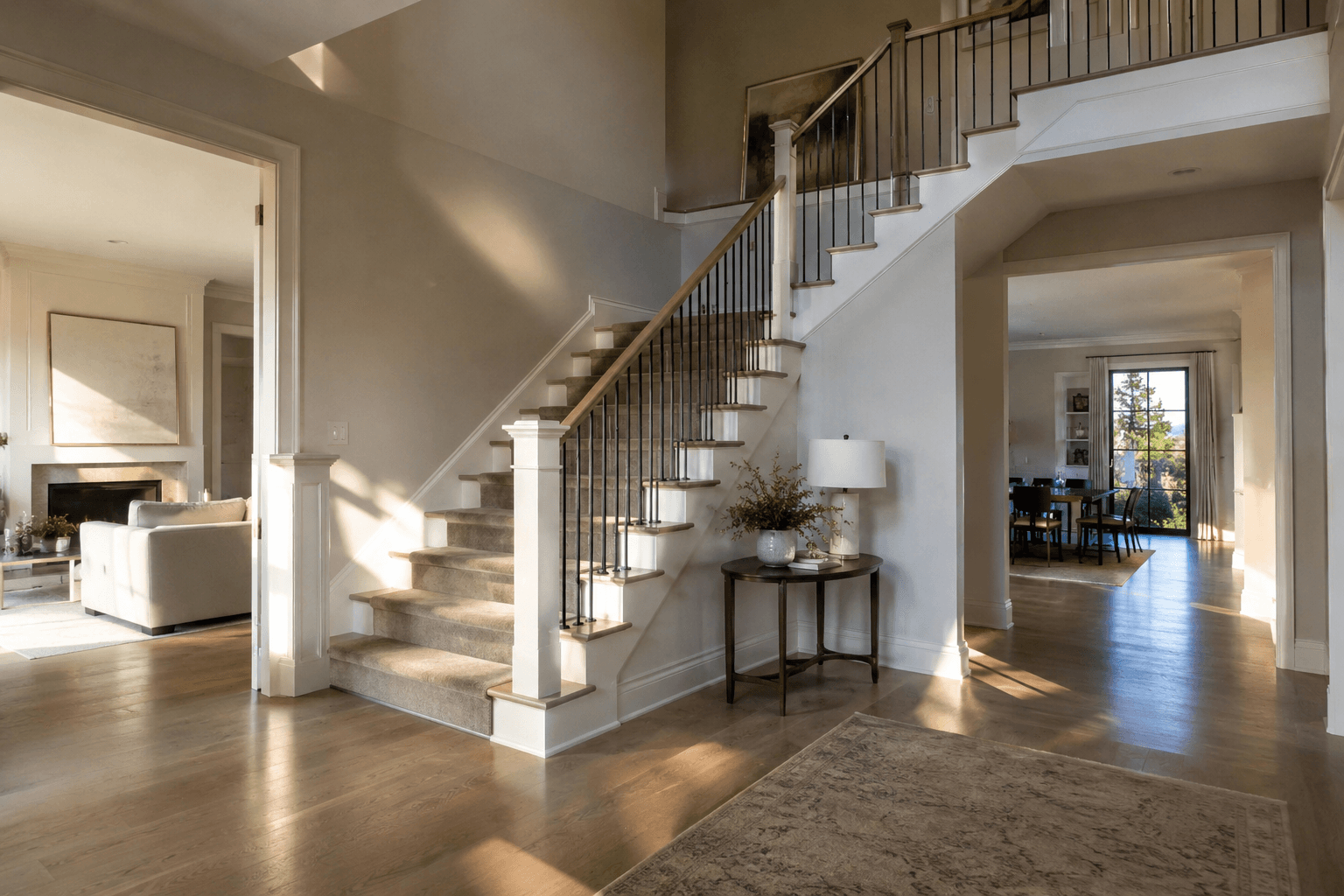
This idea echoes an intuition put forward by the philosopher Alva Noë. The common intuition is to imagine perception as a camera: the eyes capture light, the brain receives an image, and we “see” the living room. Noë profoundly challenges this model. Perceiving would not mean passively receiving information: it would be an activity we carry out.
In concrete terms: when you look at a coffee table in the middle of a living room during a visit, your brain does not capture a complete photograph of the object. Much of it remains invisible from where you stand. Yet this creates no sense of uncertainty, because you already know, implicitly, how the table's appearance would change if you moved around it.
Our relationship to space depends less on what we see immediately than on what the body already knows it can do there.
What Noë helps us understand is a reality that buyers experience without being able to name it. Two properties can seem comparable on paper without making certain habits, routines or ways of living there day to day equally self-evident. The body evaluates before the mind puts it into words. And this silent verdict is often delivered in the first few minutes of a visit… well before anyone has opened a closet or checked the water pressure.
The home as an extension of our memory
Selling a family home is rarely a purely financial decision. Even when the logic is clear, the timing is right, the market is favourable and life plans have changed, something resists. A hesitation that sellers often describe as irrational, without really being able to name it.
The philosopher Andy Clark may offer an explanation. With David Chalmers, he developed a hypothesis that has become influential in the cognitive sciences: in certain situations, our cognitive processes would not be entirely contained within the brain. They would also rely on stable elements of the outside world.
We experience this every day, often without realizing it.
Our phones store numbers we no longer memorize. Our calendars carry part of our organization. Certain lists replace mental efforts we once would have had to actively maintain. Cognition does not disappear outside the brain. It is redistributed.
The places we live take part in this silent organization in the same way. A well-designed kitchen, where every object has its place, ends up reducing the effort needed to cook. A study organized around familiar landmarks supports certain work habits without our thinking about it. Environments are not simply decorative arrangements. They are sometimes the material gears of our thinking.
The home then becomes more than a backdrop: it takes part in the silent organization of certain habits, landmarks and ways of acting.
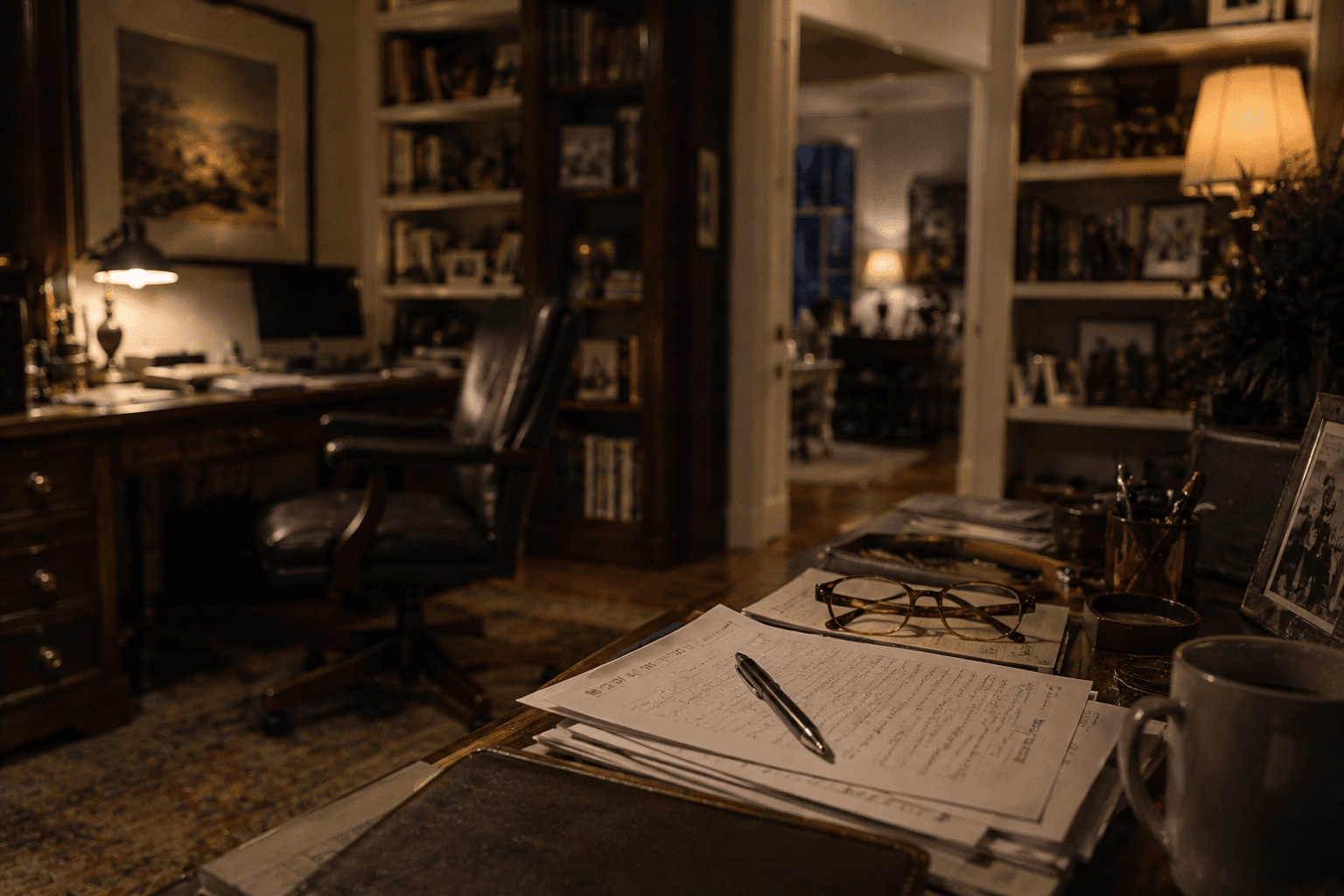
Merleau-Ponty had a more poetic image to describe this mechanism: the blind person's cane. At first, attention is focused on the palm holding the cane. With repetition, perceptual attention slides down to the tip, to the point of contact with the sidewalk. The cane disappears as an object and becomes an additional sensory organ. Familiar space works in a surprisingly similar way.
This may be why moving ranks among the most trying experiences of a lifetime. It is not just a matter of moving furniture or changing addresses, but of slowly rebuilding a whole set of invisible landmarks that supported daily life.
Leaving a family home sometimes means parting with an environment that has become silently intertwined with routines, memories and a certain continuity of the self. Something financial logic struggles to measure.
Buying a property sometimes means choosing more than a location
When a family chooses a house, it is also choosing an environment in which certain habits will become more likely than others.
A walkable neighbourhood. A room dedicated to work. A large kitchen open to the dining room. A quiet space. Proximity to nature.
These elements rarely change a life overnight. Rather, they slowly contribute to the shape it will take.
Perhaps this is also why certain real estate decisions resist comparison charts: two properties can seem similar on paper without offering the same possibilities for living.
Another way of thinking about real estate, perhaps: not only as an asset or a place to live, but as the set of conditions from which certain ways of inhabiting the world will become possible… or, sometimes, harder to leave.
Another way of thinking about real estate
I am not claiming that the philosophy of perception should replace comparative market analysis or market valuation. These tools remain essential.
But perhaps they don't tell the whole story.
When a buyer hesitates without being able to explain why, or a seller resists despite favourable logic, it is not necessarily irrationality. It is sometimes a sign that something deeper is at play. Something the numbers don't easily capture.
A home is also the space from which a certain version of oneself becomes possible.
Perhaps this is also why some homes remain hard to leave… and others hard to explain.
Thinking about selling your property?
Our team can evaluate your property and support you at every step of the sale.
Related content

Selling a house in the Town of Mount Royal in 2026: the owner's strategic guide
Selling a house in the Town of Mount Royal isn't quite like selling anywhere else in Montréal.

Why TMR Market Requires Patience and Precision
The TMR market remains resilient: despite longer selling times, prices have remained stable due to the limited supply of available properties. In a more uncertain economic environment, buyers are taking more time to make decisions.

Selling the Family Home: What Nobody Tells You Before You Do It
There is one thing no one tells you when the idea of selling the family home begins to take hold: it is not just a real estate decision. It is a life transition. And while you are navigating it, the market keeps moving.