
The Future Town of Mount Royal Sports and Community Centre: Impact on Property Values
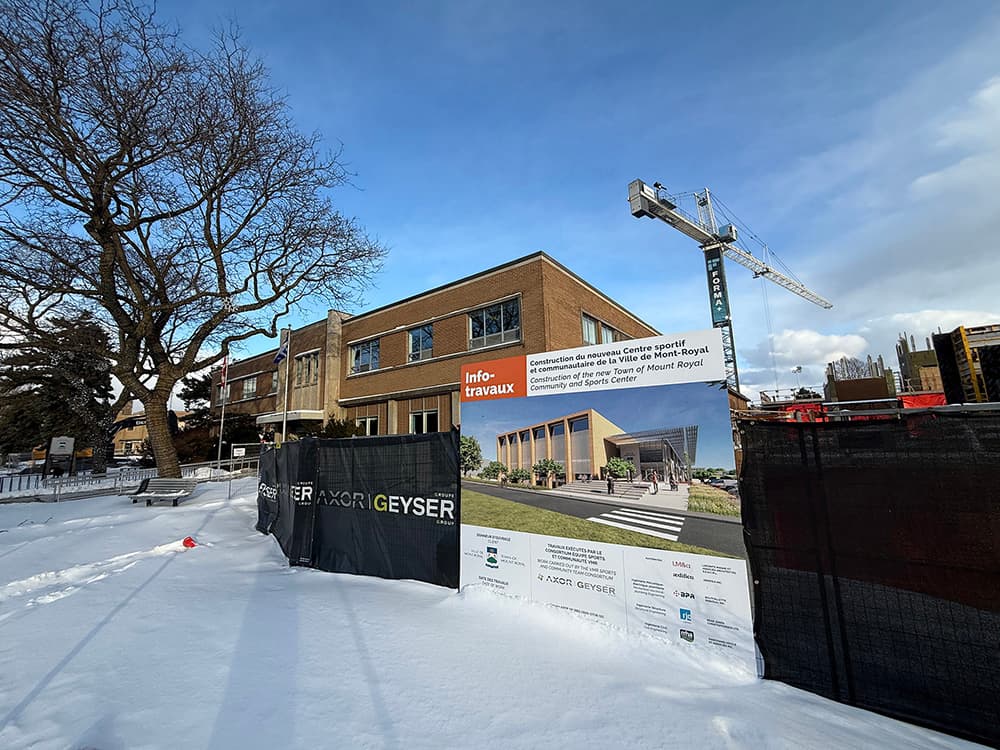
The future Town of Mount Royal Sports and Community Centre is now under construction and is expected to open in spring 2028, with modern facilities that will make a real difference in residents' daily lives.
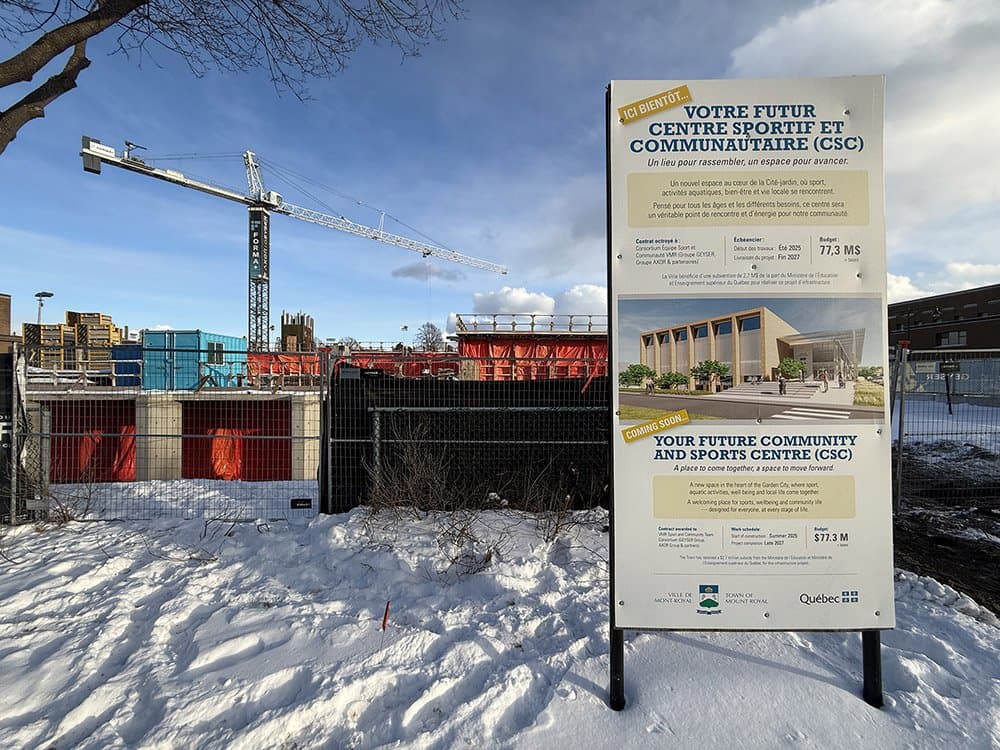
In the Town of Mount Royal (Ville Mont-Royal), some projects change a neighbourhood. Others change a routine. The future Sports and Community Centre (CSC) clearly belongs in the second category: a facility that won't just be used for “doing sports,” but will reshape the daily lives of thousands of residents. And above all: after years of discussions, pauses and restarts… the project is now under construction. Here is a clear picture of the situation: where things stand, what's coming, and what it will actually change in the Town of Mount Royal.
As early as the beginning of the 2010s, the Town noted that the existing facilities were outdated, too small, and above all unable to keep up with demand. The need was real: activities were full, and residents had to go elsewhere to get comparable services.
In 2019, a loan by-law was adopted, leading to the municipal referendum of February 16, 2020. Residents approved the project, and in March 2020 it was officially authorized to move to the implementation stage. Then came the shock: in 2021, the first call for tenders was cancelled. In February 2023, the Town presented a version 2.0 of the centre: a more compact, three-storey building instead of four storeys, but still with the essentials: pool, gymnasium, multipurpose rooms.
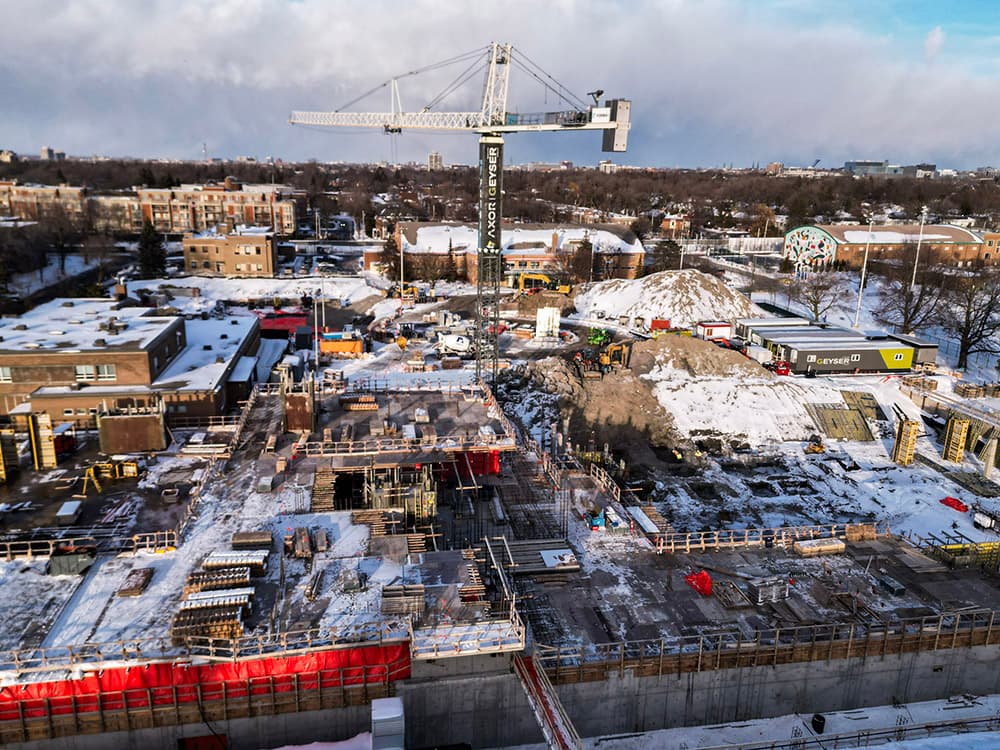
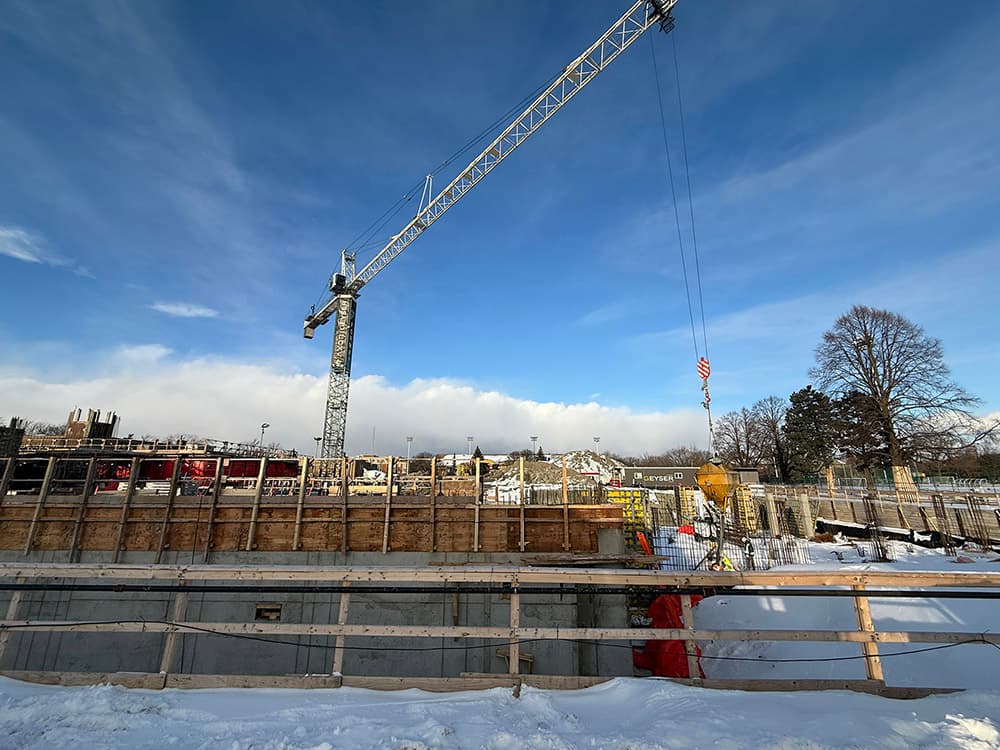
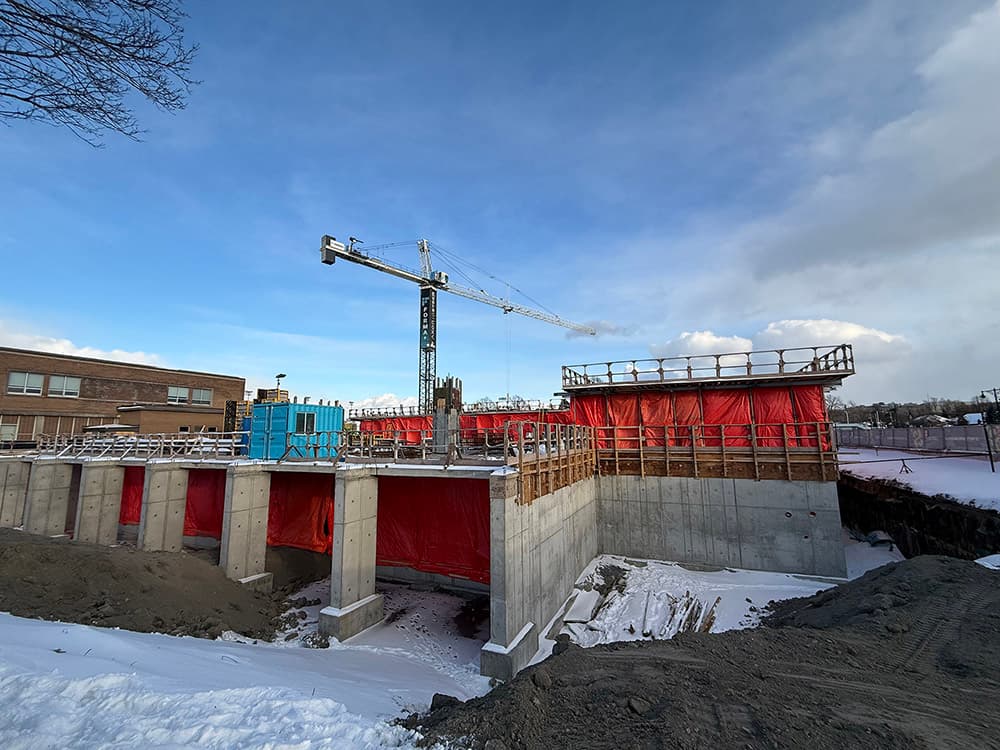
Construction has begun and the structure is progressing. As of early 2026, the structural work phase is under way. The project is literally rising out of the ground. At this stage, no major setback has been publicly reported.
This is exactly the kind of moment when a project becomes “real” for residents: we are no longer talking about an abstract future centre. We can see the transformation on the ground. The opening is planned for spring 2028.
Impact on property values.
In North America, numerous studies conclude that public recreational spaces (parks, trails, sports centres) enrich a neighbourhood. They act as an amenity buyers are willing to pay for, which often translates into a modest but significant real estate premium for nearby homes. For example, in Plano (Texas), a study showed that homes within a 400 m radius of a park are worth on average ≈+10% more, and parcels directly bordering the facility can reach +15–20% (especially for smaller condominiums). This increase in land value also benefits the community as a whole. 400m in Mount Royal is almost the entire town.
Similarly, in Dallas (Texas), another study determined that the combined effect of significant public parks (with facilities) added some $345 million in value per year to adjacent neighbourhoods. These figures illustrate an order of magnitude: the addition of a quality sports centre generally tends to raise surrounding property prices by a few percent.
The Proximate Principle
John Crompton, of Texas A&M University, formalized the “Proximate Principle,” which holds that proximity to a high-quality park or recreation centre translates into a premium on property values. This principle is universally recognized but varies in intensity depending on the type of facility. Empirical studies indicate that properties located within the “zone of influence” of a major community park can see their value increase by 5% to 20% compared with comparable properties located outside that zone. This added value is not merely theoretical; it materializes through higher property taxes, creating a virtuous cycle in which the infrastructure partly finances its own existence by broadening the tax base.
The value decay curve
The positive impact is not linear; it follows a rapid decay curve based on distance.
Immediate Impact Zone (0 - 150 metres): This is the paradoxical zone. Residents enjoy the most direct access, but also bear the potential negative externalities (noise, light, parking). In the case of “active” centres (with pools and gymnasiums), the premium can be slightly reduced by these nuisances if they are not managed through design (e.g., soundproofing, underground parking).
Optimal Impact Zone (150 - 500 metres): This is the real estate “sweet spot.” Residents are within walking distance (5 to 7 minutes) but far enough away not to hear referees' whistles or the noise of HVAC systems. It is within this band that appreciation has historically been strongest, reaching as much as 10% to 15% as a specific premium. Diffuse Impact Zone (500 metres - 1 km): Beyond this distance, the direct effect fades and blends into the general “neighbourhood quality” effect. The premium generally ranges between 2% and 5%
Expected benefits (values, attractiveness, health)
- Real estate premium: a well-designed sports centre is an asset for the surrounding area. Buyers are often willing to pay extra to live near public recreational infrastructure. This attractiveness pushes prices up moderately , consolidating the value of homes in the area.
- Neighbourhood vitality: a sports centre generates local activity. It attracts families and sports enthusiasts, strengthens social ties (sports sessions, community events, intergenerational activities) and enhances the neighbourhood's image. More generally, studies show that this infrastructure is a “vital economic driver”: it creates local jobs, develops sports tourism (tournaments, extracurricular activities) and supports local businesses. Over time, this benefits the community (more tax revenue) and residents' quality of life.
- Public health and social savings: a community sports centre makes regular physical activity easier, which improves residents' health. Research indicates that free or low-cost access to sports facilities translates into significant public health savings (fewer illnesses linked to a sedentary lifestyle). In other words, the new centre could help reduce individual and collective health care costs.
Risks and issues to watch
- Noise and nuisance: any sports facility generates noise (balls bouncing, aquafitness music, impacts in the gymnasium, announcements, etc.). The closest neighbours may experience noise disturbances, especially during events or competitions. This phenomenon (well documented with tennis and pickleball, for example) can put off some buyers who value a quiet neighbourhood, or even trigger complaints from neighbours.
- Traffic and parking: an attractive community centre inevitably increases local trips. During peak activity hours, more cars and pedestrians may be seen on the surrounding streets. Without adequate planning (sufficient parking, safe pedestrian access, adjusted traffic lights), the additional traffic can cause congestion and temporarily reduce residents' comfort.
- Real estate pressure: the neighbourhood's increased appeal may strengthen local housing demand. If the centre's construction is accompanied by other projects (new housing, shops), rising prices could accentuate land-value inflation. In Mount Royal, where land is already expensive, this could reduce affordability for new buyers. Property tax increases linked to higher values may also be viewed negatively by some owners.
- Quality of the project's integration: the final impact will depend largely on how the centre is integrated into the neighbourhood. Careful architectural design, harmonious landscaping and mitigation measures (acoustic insulation, green buffer zones, cycling/pedestrian infrastructure) will limit the drawbacks. Conversely, a poorly adapted “brutalist” building or poor management of flows (badly staggered schedules, lack of parking) could exacerbate the negative effects. The key will therefore be thoughtful urban integration (design, accessibility, noise and traffic control) to maximize the benefits and ease concerns.
In summary, most North American research points to a rather positive outcome for property values: proximity to quality recreational facilities generally drives increased demand and a slight price gain. The quantified examples (Plano, Dallas, etc.) suggest a gain of a few percent under the best conditions. However, these effects depend on the quality of the project and how it is operated. With good planning and open dialogue (for example, to limit noise and adjust parking), Mount Royal's new sports centre should strengthen the neighbourhood's appeal and cohesion while preserving residents' quality of life.
Thinking about selling your property?
Our team can evaluate your property and support you at every step of the sale.
Related content

Selling a house in the Town of Mount Royal in 2026: the owner's strategic guide
Selling a house in the Town of Mount Royal isn't quite like selling anywhere else in Montréal.
Why TMR Market Requires Patience and Precision
The TMR market remains resilient: despite longer selling times, prices have remained stable due to the limited supply of available properties. In a more uncertain economic environment, buyers are taking more time to make decisions.
What distinguishes the properties that sell in TMR
In TMR, the best sales are rarely the most visible, but the best prepared. The 2026 data confirms that accurate positioning remains a key determinant.