
Certificate of Location in Quebec: What It Is, When to Renew It and What It Costs
Contents, the 10-year rule, changes that require a new certificate and the 2026 suggested fee: what sellers and buyers need to know, according to Quebec's land surveyors.
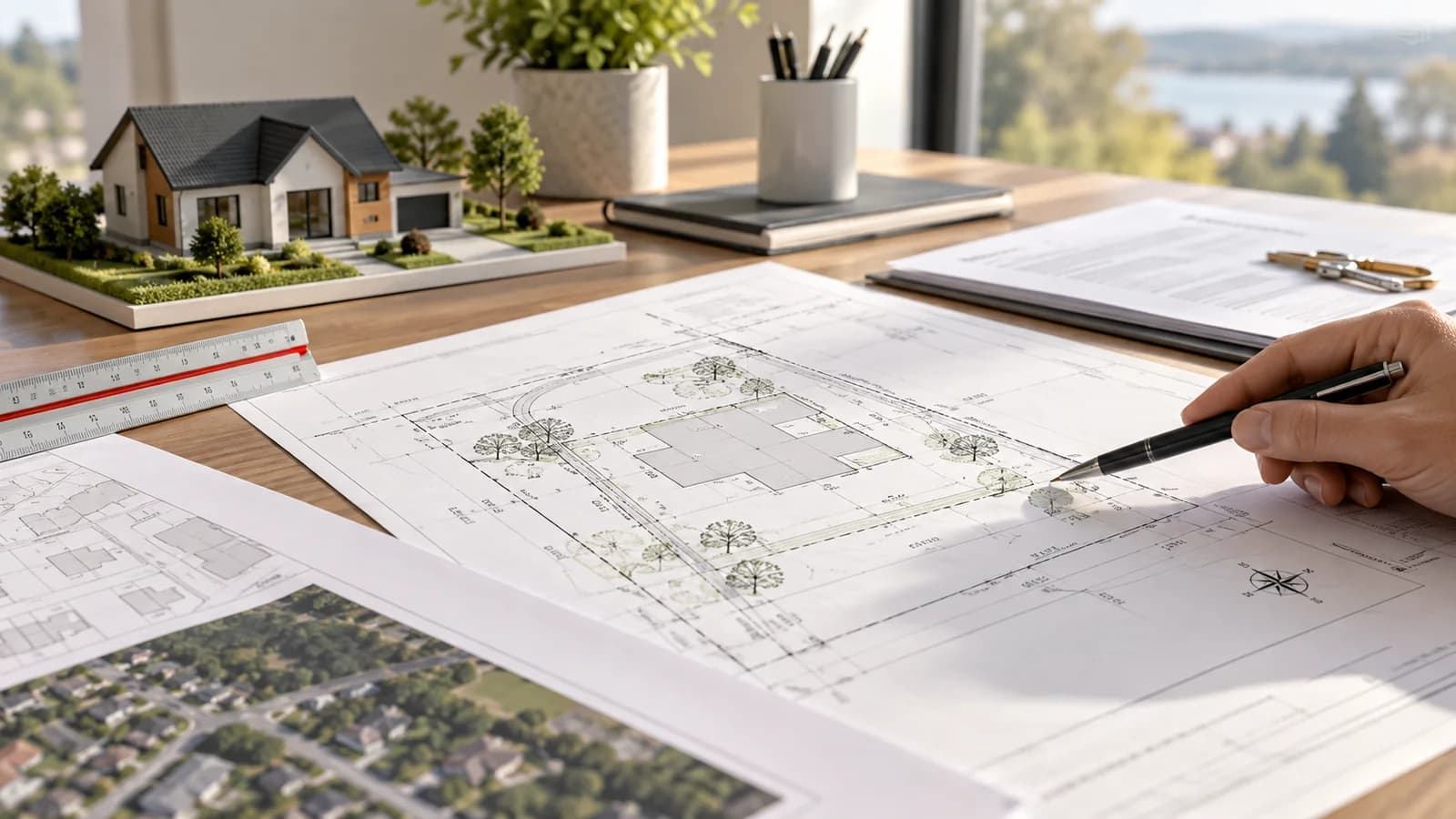
The certificate of location is one of the documents the notary reviews before any sale. If it is too old, or if the property has changed since it was prepared, you need a new one, and that takes time. Here is what it contains, when to renew it, what it costs and who pays.
At a glance
- The certificate of location (certificat de localisation) is a report with a plan, prepared by a land surveyor, the only professional authorized to produce it.
- It describes the property's current situation: servitudes, encroachments, risk or flood zones, and compliance with certain municipal by-laws.
- No law sets an expiry date. But the Chambre des notaires and the OACIQ ask their members to require a certificate less than 10 years old, and a new one is needed as soon as the property has been modified.
- The 2026 suggested fee guide of Quebec's Order of Land Surveyors lists $1,630, plus taxes and disbursements, for an urban single-family home. In Quebec, the seller usually pays for it.
What is a certificate of location for?
According to the Government of Quebec (https://www.quebec.ca/habitation-territoire/achat-vente/certificat-localisation), this document is required for any real estate transaction. It protects both the buyer and the seller: the land surveyor gives an opinion on the property's situation in relation to titles, encroachments and the laws and regulations that affect it.
The Ordre des arpenteurs-géomètres du Québec (OAGQ) also notes that article 1719 of the Civil Code requires the seller to give the buyer the certificate of location in their possession, along with the deed of acquisition and prior titles. A lender or notary may require an up-to-date certificate.
What does it contain?
The certificate includes a report and a plan. According to the OAGQ (https://oagq.qc.ca/services/certificat-de-localisation/), the land surveyor checks, among other things:
- the updated description of the land;
- servitudes, such as a right of way;
- constraints: agricultural zone, flood zone, environmental protection zone, airport zone, etc.;
- encroachments;
- compliance with various municipal and government regulations, such as setbacks for a pool or a shed.
A certificate of location is not used to mark property lines on the ground. For that, a land surveyor performs staking or boundary determination, which are separate services.
When do you need a new one?
According to the OAGQ (https://oagq.qc.ca/grand-public/situations-communes/duree-de-vie-du-certificat-de-localisation/), no law or regulation makes a certificate of location expire. But the more time passes, the more likely the property's situation has changed. A new certificate is required, for example, after:
- an extension to the house;
- building a garage, a pool or a shed;
- adding a fence or a hedge;
- buying or selling part of the lot, or a cadastral renewal;
- a new servitude (right of way, Hydro line) or a change in risk zones.
Even without visible changes, the Chambre des notaires du Québec and the OACIQ ask their members to require a certificate less than 10 years old. The lender or notary may also require a recent certificate showing the current state of the property. When in doubt, ask a land surveyor or a notary.
How much does a certificate of location cost?
The OAGQ's 2026 suggested fee guide (https://oagq.qc.ca/ressources/guide-des-tarifs-suggeres/) lists $1,630 for an urban single-family home under normal conditions, with disbursements and applicable taxes extra. This is a suggested fee: the actual price depends on the property and the surveyor. Ask for a quote.
In Quebec, the seller usually pays for the certificate of location.
Selling: practical advice
- Check the date of your certificate as soon as you start thinking about selling, before listing.
- If you have done exterior work (pool, shed, extension, fence), order a new certificate without waiting for an offer.
- Read the report: an irregularity found early is easier to fix than a few days before signing at the notary's office.
- To get a copy of an old certificate, contact the land surveyor who prepared it. If they have retired, the OAGQ can tell you who holds their records.
Buying: what to look for
Ask to see the certificate early and read the section on servitudes and encroachments. A misplaced fence or a shed too close to the property line can have consequences: see our article on acquisitive prescription and old fences. If the notary's review reveals an irregularity, the promise to purchase provides a mechanism to notify the seller.
Frequently asked questions
Is a certificate of location mandatory to sell?
According to the Government of Quebec, it is required for any real estate transaction. The Civil Code requires the seller to provide the one they have, and the notary or lender may require an up-to-date certificate.
How long is a certificate of location valid?
No law sets a duration. The Chambre des notaires and the OACIQ ask their members to require a certificate less than 10 years old, and a new one is required if the property has been modified.
How much does a certificate of location cost in 2026?
The 2026 suggested fee guide of Quebec's Order of Land Surveyors lists $1,630 for an urban single-family home, plus taxes and disbursements. The actual price varies by property.
Who pays for the certificate of location, the seller or the buyer?
In Quebec, the seller usually pays, according to the Ordre des arpenteurs-géomètres du Québec.
Related reading
Sources, method and limitations
- Ordre des arpenteurs-géomètres du Québec, "Certificat de localisation" (in French) (https://oagq.qc.ca/services/certificat-de-localisation/): contents, Civil Code article 1719, who pays.
- OAGQ, "Durée de vie du certificat de localisation" (in French) (https://oagq.qc.ca/grand-public/situations-communes/duree-de-vie-du-certificat-de-localisation/): changes that require a new certificate, 10-year rule.
- OAGQ, "Guide des tarifs suggérés 2026" (in French) (https://oagq.qc.ca/ressources/guide-des-tarifs-suggeres/): suggested fee.
- Government of Quebec, "Certificat de localisation" (in French) (https://www.quebec.ca/habitation-territoire/achat-vente/certificat-localisation).
The fee quoted is a suggested fee for normal conditions; the actual price depends on the property and the professional. Information current as of October 8, 2026; this is not legal advice. For a specific case, consult a land surveyor or a notary.
Getting ready to sell? We go over the documents to gather, including the certificate of location, with you before listing. Call us at 514-700-1221.

Thinking about selling your property?
Our team can evaluate your property and support you at every step of the sale.
Related content

Home Staging: Preparing Your Home for Sale in Montreal, Room by Room
Declutter, depersonalize, repair, light it up: the home staging steps, room by room, and what staging does not replace, before you list your property.

Municipal Assessment vs Market Value: Why They Differ in Montreal
The 2026-2028 roll reflects the market as of July 1, 2024. What each value measures, why the gap can be large and when to request a review.

Selling a house in the Town of Mount Royal in 2026: the owner's strategic guide
Selling a house in the Town of Mount Royal isn't quite like selling anywhere else in Montréal.