
The seasonality of residential real estate: Is there really a better time to buy or sell?
Discover how seasonal cycles shape Montréal’s real estate market… and when buying or selling can truly make a difference.

In-depth analysis based on North American and Montréal data
In the field of residential real estate, understanding seasonal cycles represents a major competitive advantage for brokers, sellers, and buyers. This analysis takes a deep look at seasonal trends observed in the North American market, with a particular focus on Montréal, in order to identify the optimal periods for buying or selling a property.
Unlike secondary residences or vacation properties, primary residential real estate follows predictable cycles influenced by social, economic, and climatic factors. These patterns, well documented by the National Association of REALTORS® (NAR) in the United States and confirmed by Québec’s local data, reveal significant strategic opportunities for those who know how to interpret and leverage them.
Our study is based on a rigorous analysis of sales data, market liquidity, and price variations across the seasons. The conclusions are supported by recent U.S. statistics as well as our internal analyses using Centris data, processed by Équipe Lefrançois.
Key U.S. insights
American statistics confirm certain obvious patterns present in nearly all markets. Families prefer to move in spring or summer to align with the school calendar. Even buyers without children—whether seeking a single-family home or a condo—often favor a summer move.
Weather also plays a crucial role. The advantage of selling during a period of high demand, such as spring, is even more pronounced in northern regions. It can be assumed that the more favorable presentation of properties during warm months, as well as the more convenient conditions for summer moves, amplifies this effect.
In spring, there are more buyers, which means greater market liquidity—but also more sellers. So who really has the advantage? An analysis of seasonal price variations reveals systematic trends that offer real financial opportunities. U.S. data shows that properties sold in June average 16% higher prices than those sold during winter (December to February). For more than 25 years, June has consistently been the most advantageous month for sellers in terms of achieved sale price.
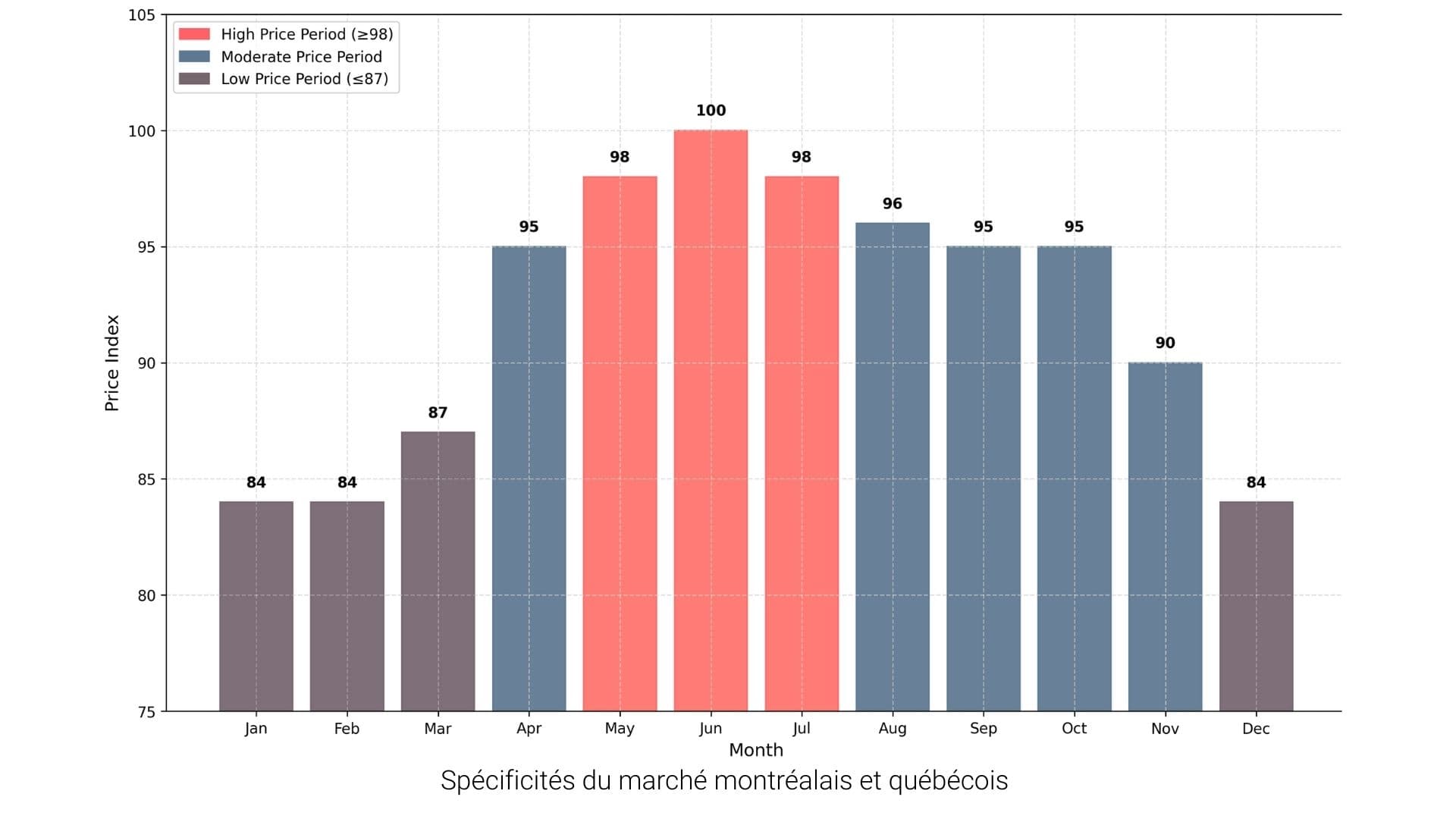
Chart 1 illustrates the variation in average monthly prices compared with June. It clearly shows that strong spring liquidity favors sellers, closely followed by the August–October period. Buyers, meanwhile, retain a significant financial advantage throughout the rest of the year, despite having a more limited selection of properties.
The unique factor of July 1st
Québec’s real estate market stands out in North America because of the July 1st moving tradition. This cultural and legal particularity accentuates market seasonality, making Montréal’s dynamics more pronounced than in other regions. The near-universal expiration of residential leases on June 30th leads to an exceptional concentration of purchase demand during the spring months.
Creation of a local index: the Seller Advantage Index (SAI)
In the absence of formal studies, we developed our own Seller Advantage Index (SAI) using monthly transaction data from the past ten years, while minimizing the impact of the pandemic period.
This index is based on several criteria:
- the sale price / asking price ratio,
- the days on market,
- the inventory absorption rate,
- and the net price obtained.
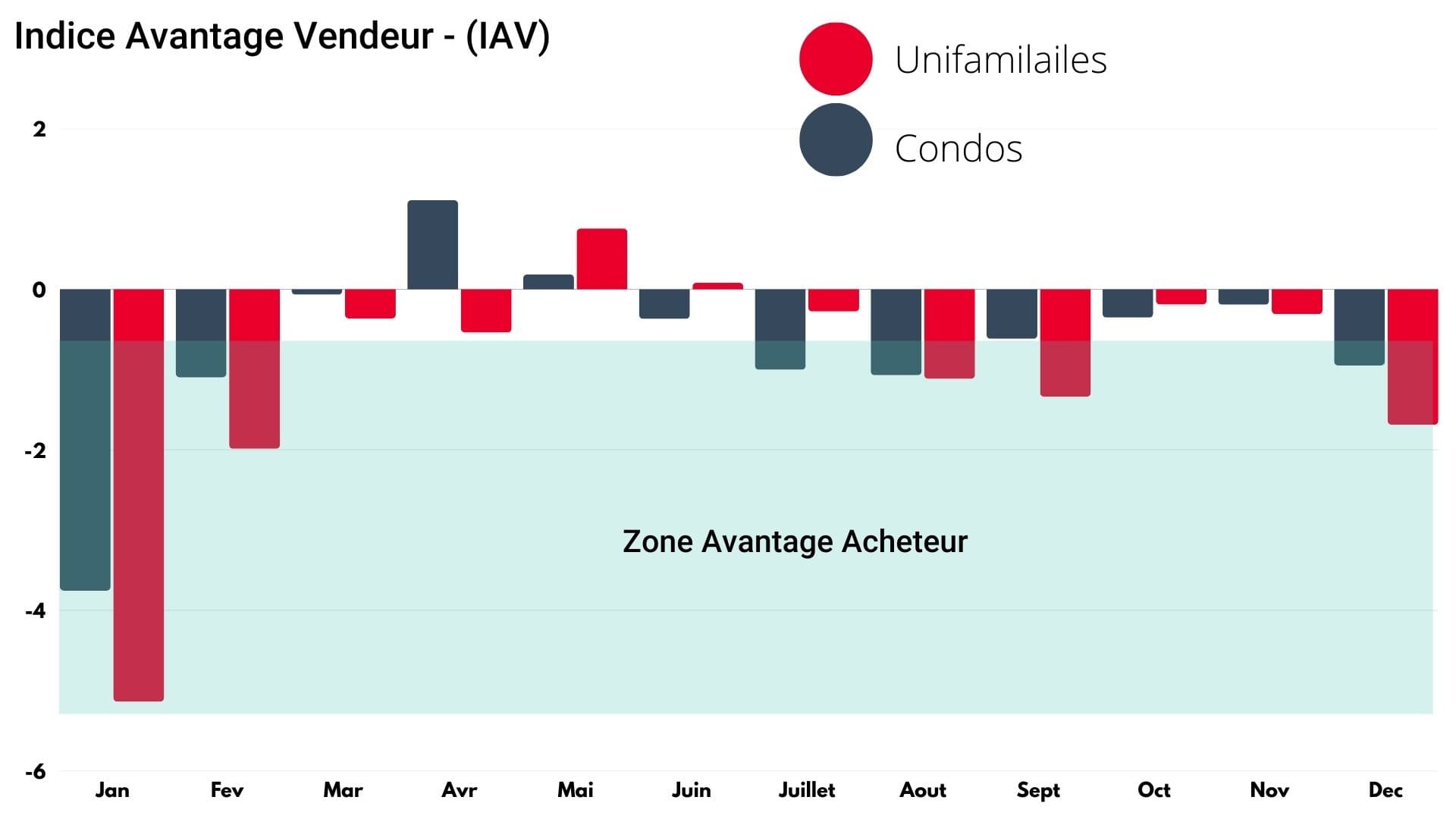
By analyzing the variations of these measures month by month, we identified recurring, statistically significant patterns. The following chart (2) shows that the higher the SAI value, the more favorable the market is for sellers—and vice versa.
These conclusions broadly confirm U.S. observations. The only notable difference: the autumn shift. While August and September stand out as strong periods in the U.S., it is rather October and November that are prominent in Montréal—just before the advantage shifts clearly to buyers, and even more sharply than in markets south of the border.
Conclusions and limits
For sellersAn effective strategy is to list slightly above market value at the start of the active season, then adjust progressively if necessary. This approach captures the most motivated buyers while preserving room for tactical adjustments. Strong spring liquidity reduces the risks tied to this strategy.
Caution is needed in the fall. While that period can also be favorable, it is shorter than spring and followed by a rapid swing in advantage toward buyers.
For buyersStrategic buyers can also benefit from these cycles. By planning their purchases during more favorable price periods, they can access higher-end properties within the same budget, or achieve significant savings.
Key nuancesThese conclusions reflect long-term trends established over several years. As with any such analysis, there are and always will be exceptions. For example, Montréal’s luxury segment recently recorded its best performance during November, December, and January, driven by falling interest rates.
In short, understanding seasonality is a key factor among others—on par with economic fluctuations, migration dynamics, and social trends.
Thinking about selling your property?
Our team can evaluate your property and support you at every step of the sale.
Related content

Selling a house in the Town of Mount Royal in 2026: the owner's strategic guide
Selling a house in the Town of Mount Royal isn't quite like selling anywhere else in Montréal.

Why TMR Market Requires Patience and Precision
The TMR market remains resilient: despite longer selling times, prices have remained stable due to the limited supply of available properties. In a more uncertain economic environment, buyers are taking more time to make decisions.

Selling the Family Home: What Nobody Tells You Before You Do It
There is one thing no one tells you when the idea of selling the family home begins to take hold: it is not just a real estate decision. It is a life transition. And while you are navigating it, the market keeps moving.